Indigenous lands are places of abundance and beauty- lands that hold the capacity to become home for new economies and ways of thriving that are models of sustainability and resilience.
Throughout Indigenous communities there is an abundance of renewable energy potential. Wind power alone has the potential to produce 190,000 megawatts of electricity, and solar energy potential is twenty times this amount! This wealth is an opportunity to step into a future that stands in stark contrast to the history of energy development within Indigenous nations.
Meanwhile, the fossil fuel and nuclear based energy industry has had and continues to have a devastating impact on our communities, notoriously contaminating the land, air, and water, creating conditions ripe for labor abuse, trafficking, and increased violence. These industries also lie at the root of internal conflict, with companies promoting the idea that this type of development is the only way out of poverty.
There are renewable energy companies who have also been installing immense renewable energy developments in destructive ways that violate Indigenous peoples’ rights, displacing peoples and destroying ecosystems.
As Renee Gurneau, an educator whose activism is grounded in Anishinaabe spiritual tradition has stated, “We have become financially dependent upon our own cultural destruction.”
“Our vision is to leverage clean energy technology to enhance tribal sovereignty and energy independence, while creating sustainable jobs and wealth in line with traditional Indigenous values.”
– Native Renewables
Wahleah Johns and Suzanne Singer, co-founders of Native Renewables, a Native American and women-led organization based on the Navajo Nation and Hopi reservation. Photo credit: Camille Seaman
More and more today, however, we are resisting these forces on every front, utilizing national and international legal tools as well as direct actions and working internally with our own Nations to build alternatives to these destructive development practices. Hundreds of Indigenous communities and Nations are working to develop their own renewable energy resources as a pathway to energy self-sufficiency that cares for land, water, and air, to support the resilience of communities in the face of climate change, and to provide employment and income for their people. We are investing in energy efficiency, reducing our consumption and recognizing the value of saving energy produced, with strongly positive impacts in our communities.
Energy efficiency measures alone can be the difference between a family being able to afford its energy costs and remain safe and comfortable over the winter or not. The Nunamiut Community in Yukon, Alaska decided to invest in energy efficiency upgrades and is saving nearly $55,000 dollars per year, while educating community members in energy efficiency.
Even smaller projects can have strong impact. The Coeur d’Alene Tribe of northern Idaho invested in energy efficiency retrofits for its market and is decreasing the market’s energy use by as much as 45%, and the Oneida of Wisconsin have a comprehensive energy efficiency/weatherization/retrofit programs to address residential energy efficiency across its diverse housing stock.
“Indigenous lands are places of abundance and beauty- lands that hold the capacity to become home for new economies and ways of thriving that are models of sustainability and resilience.”
Tweet
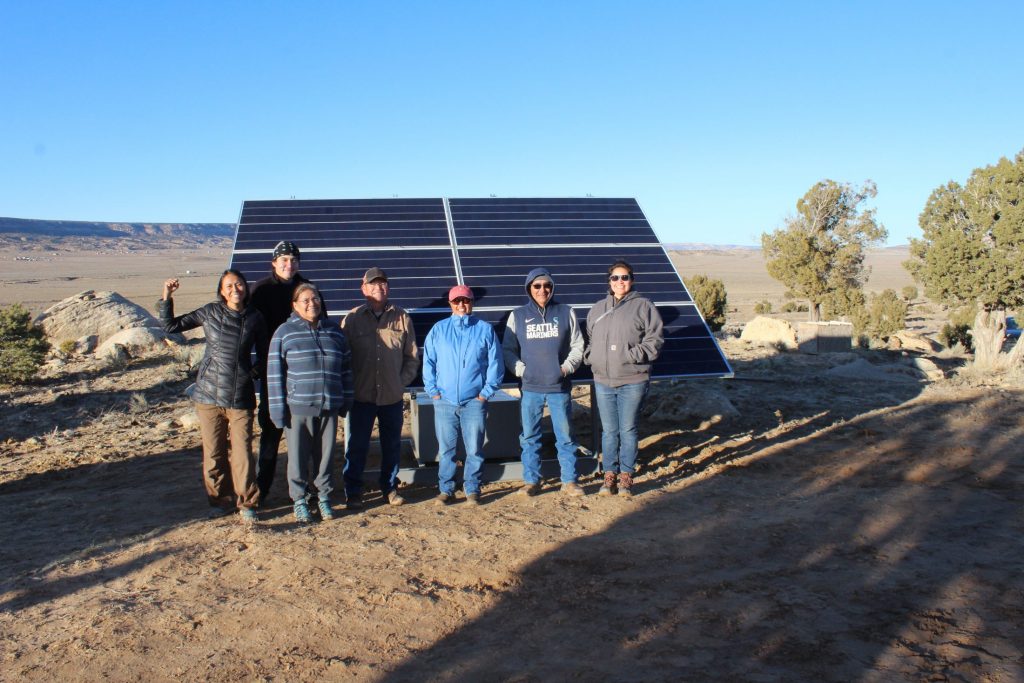
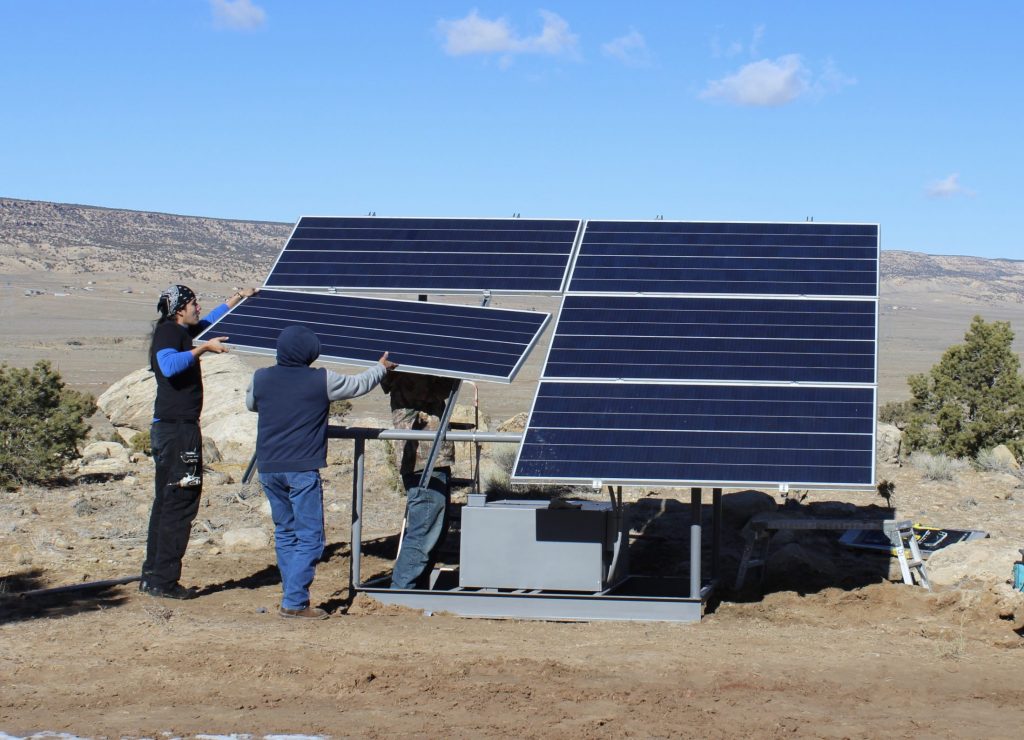
We are building energy efficiency and renewable energy programs and projects across the entire range of scale. Community based organizations are advancing strong, self-sufficient work, such as Native Renewables out of the Navajo Nation, who is developing a revolving loan fund to allow families to install their own systems, and Lubicon Solar in Alberta, Canada who is building solar electric systems to power a community devastated by tar sands development.
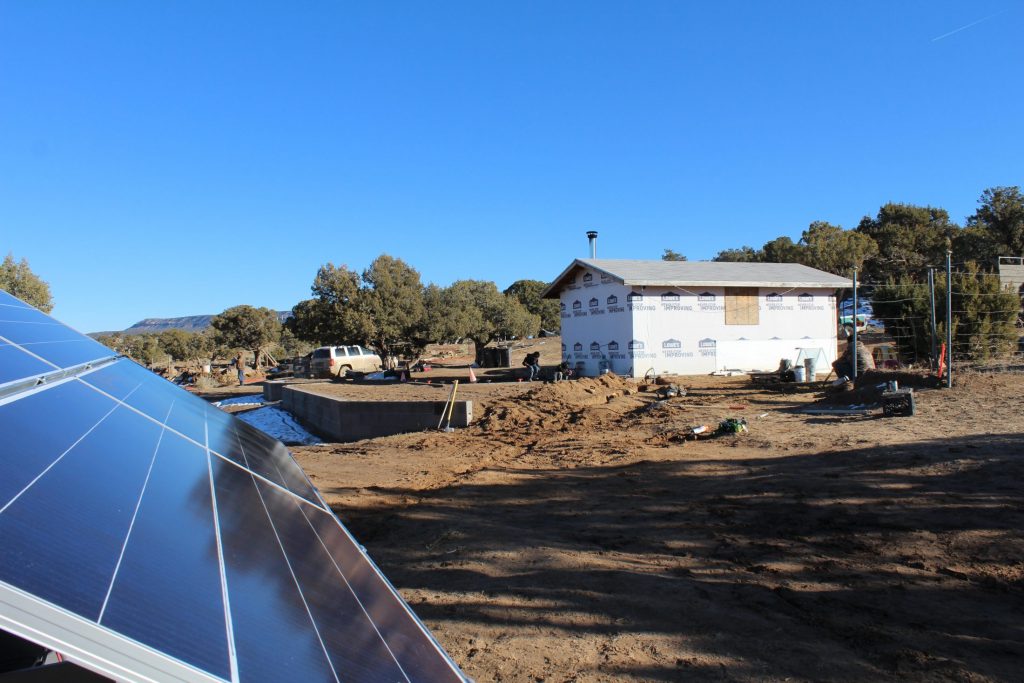
We are also using creative partnerships, tribal investment dollars, and Department of Energy technical assistance and support to build Indigenous nation-wide power systems, utility scale systems, and commercial renewable energy facilities. For example, the Bishop Paiute Tribe is working with organizations to install solar electric systems on 56 of its residences while providing training for tribal members, Picuris Pueblo of New Mexico now produces 100% of its own electricity through renewable energy powered by the solar electric facility they installed, and the Fond du Lac Tribe of Minnesota recently put in a 1 megawatt solar electric installation.
The Zapotec community of Ixtepec in Mexico are installing a community-based wind power facility, and the Oceti Sakowin Power Authority, a collaboration of six different Sioux tribes in South Dakota, has built a partnership with a renewable energy development company to develop 570 megawatts of combined generating capacity between two wind farms sited in South Dakota, which will be the largest tribally owned renewable energy installation to date!
Indigenous communities are determining our own futures, powered by the Sun, Wind, and Water. This work can be challenging, slow moving, and full of obstacles and missteps. But we continue, as we have always done, doing the healing work we need to do to re-build and renew our Nations.
We are protecting our lands, nationhood, and the futures of our communities while we build partnerships with others to advance our visions. And, we are keeping our cultural values and responsibilities strong as we design new economies and community infrastructure – building Indigenous power for our resilient future.