Decolonizing Thanksgiving And Reviving Indigenous Relationships to Food

M. Karlos Baca · November 18, 2018

Decolonizing Thanksgiving And Reviving Indigenous Relationships to Food

Consider the songs, the kinship, the lineal seed keepers, and ceremonies that guided Indigenous cosmologies, landscapes and people. Those sacred commitments left no person hungry or without medicine or without worth.

Each fall as we enter the month of November, Indigenous people are confronted with the pervasive settler colonial narratives of our history by way of the holiday referred to as Thanksgiving. This willful whitewashing of the past seeks to further eradicate the true lineages of this land through a falsified unity construct between the colonizer and the Wampanoag people, while perpetrating a continued violence against Indigenous ways of being as a whole. 

As an Indigenous foods activist and voice, I have deep concerns about the consequences of this false narrative.  How does the whitewashing of Thanksgiving impact the first people of this land and our relationship to food? And how do we reclaim and rematriate the seeds of our ceremonial food ways?

To look deeper into possible answers we must examine the systematic warfare against Indigenous foodways and food systems that started in 1492 and continues today with $29 gallons of milk at the supermarkets on modern day First Nations in Canada. 

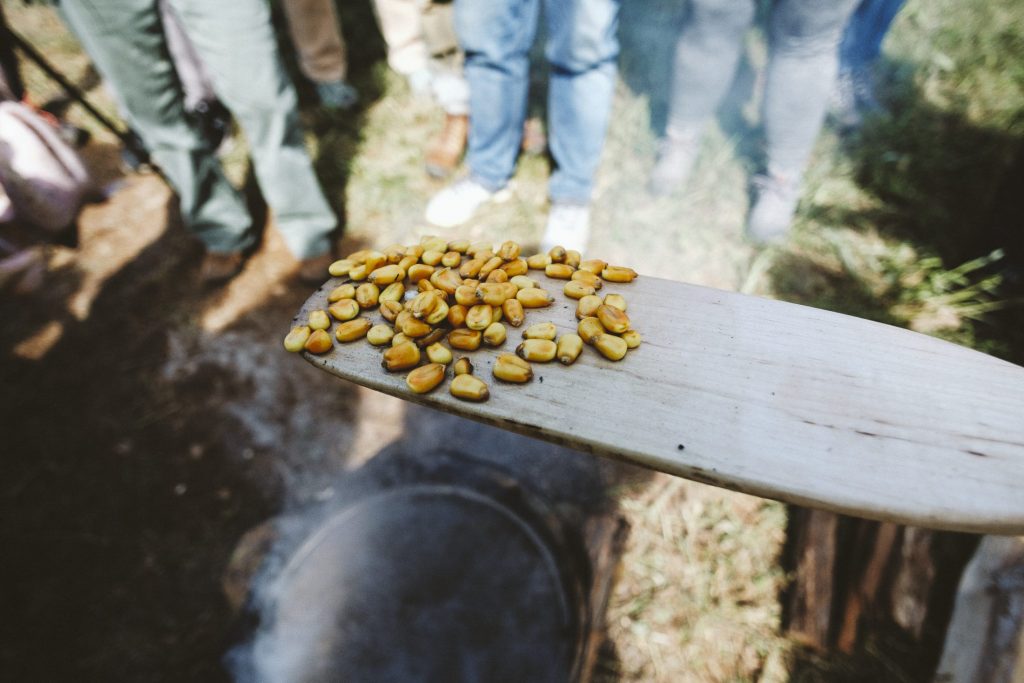
First, imagine pre-colonial Indigenous societies and their food systems: A city of pyramids, Tenochtitlan, built on a lake filled with floating gardens and a people that lived in such reverence of that which nourished them, that the translation for huautli, also known as amaranth, is “the smallest giver of life.” Consider the vast agricultural societies of the desert southwest, the Pueblo and Dinè and ranging down all the way from the Havasupai of the Grand Canyon, the Yaqui in the Valley of the Sun, to the northern Sonoran Desert and the O’odham tribes. 
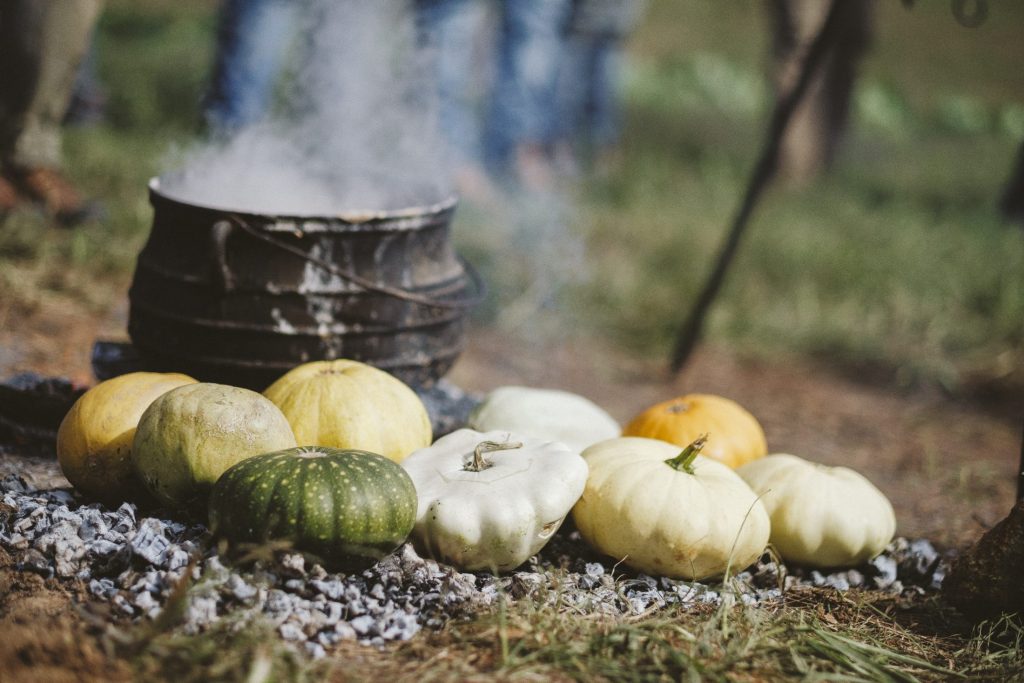
Consider the Nations who tended fruit and nut trees.  Imagine the gardens of corn, beans, squash, and sunflowers that were the ecological knowledge of the Wampanoag- the very knowledge that saved the pilgrims from starvation. Consider the songs, the kinship, the lineal seed keepers, and ceremonies that guided Indigenous cosmologies, landscapes and people. Those sacred commitments left no person hungry or without medicine or without worth. 

And now, understand the deliberate effort of colonizers to disconnect Indigenous people from our relationship to our traditional and ceremonial foodways- relationships that made us whole.  Understand the traumas of forced relocation, of slash and burn campaigns from Haudenasaunee territory to Canyon de Chelly, our hunting grounds deforested, waterways damned, and our individual and communal indigeneity gradually outlawed. Consider the settler adage that “every buffalo dead is an Indian gone.”  

Now fast forward to the American Indian Religious Freedom Act of 1978, 486 years after the first attacks on our being, and consider that it has only been forty years since we have “legally” been allowed to restore our commitments to these lands. Forty years. 
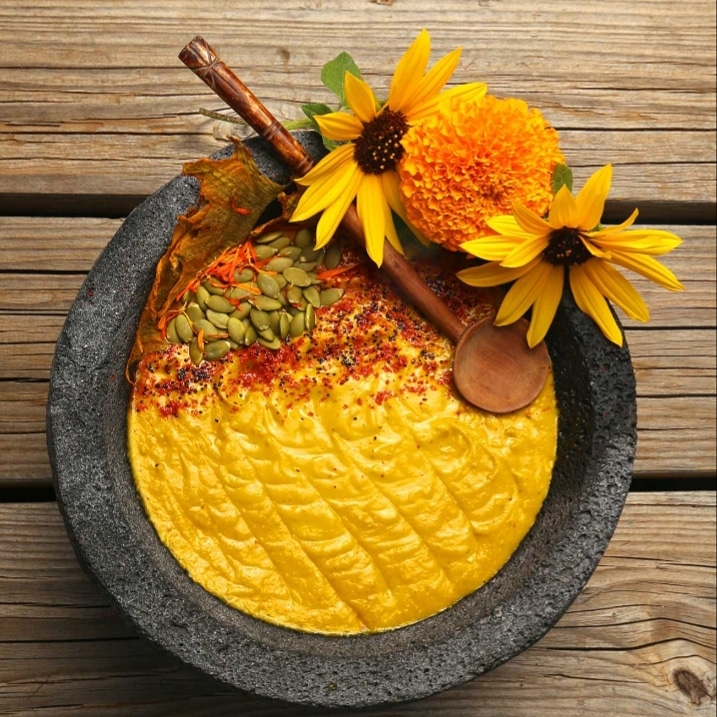
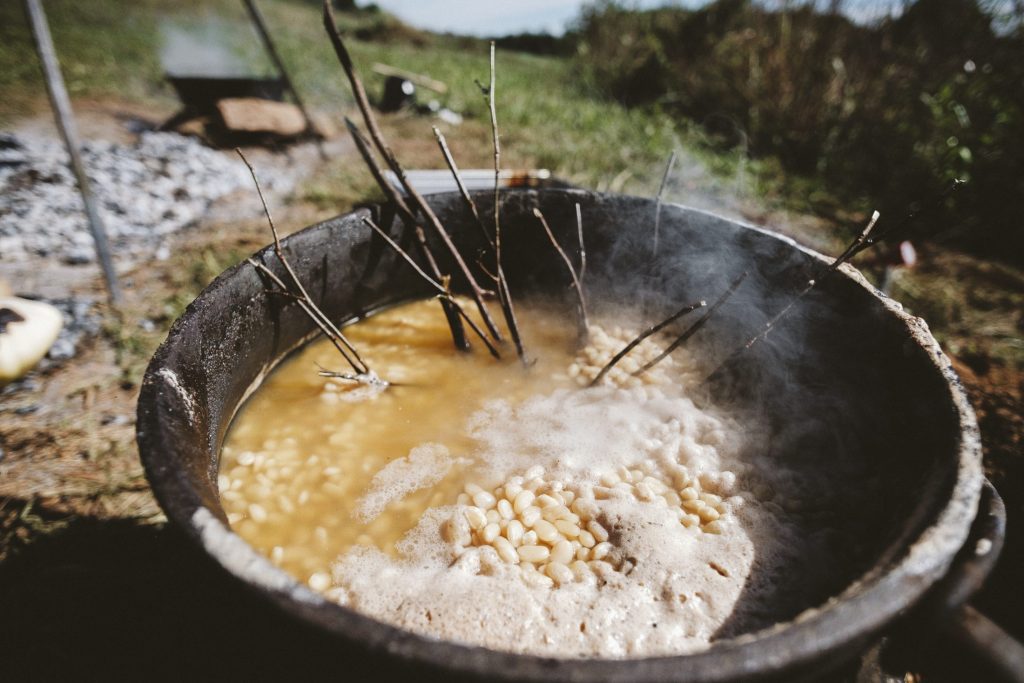
Gete Okosomin Bisque in Molcajete, Photo by Andi Murphy 

Each fall as we enter the month of November, Indigenous people are confronted with the pervasive settler colonial narratives of our history by way of the holiday referred to as Thanksgiving.

Today, we sit in a powerful place in history, and we are reconnecting to who we once were. Reclamation of language, ceremony, and foodways are guiding us back into balance. Our matrilineal heritage has been invoked and we now see our women heading to Congress.  Mothers are bringing traditional birthing practices home.  We are witnessing the rematriation of tribal seeds, the Indigenous food sovereignty movement, and our collective voices are shifting consciousness on a global level. 

To recognize that we are here, that the seeds of our matriarchs, carried woven into hair and hem, have been prayed over, honored and placed back into the womb of our earth mother and accepted water offering, is the most poetic and just testament to Indigenous resilience. 

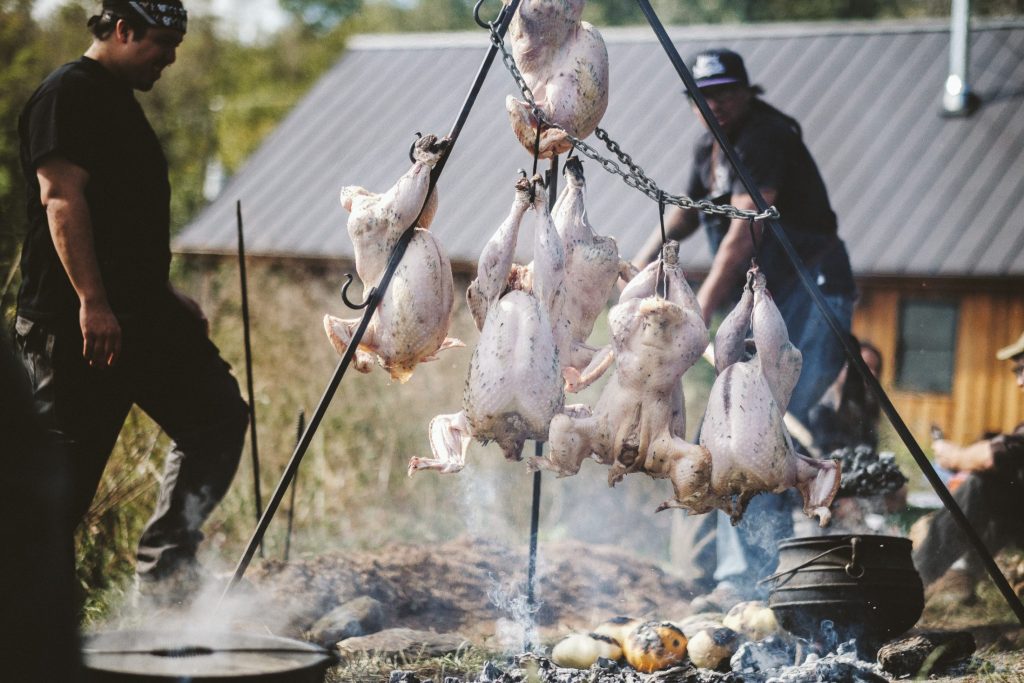
To be sure, the colonial narrative of Thanksgiving is a lie, but just as our oral traditions and histories are there for us to reclaim, we can’t forget the communal power and personal obligation to rewrite this ceremony through our sacred, lineal commitments to food. 
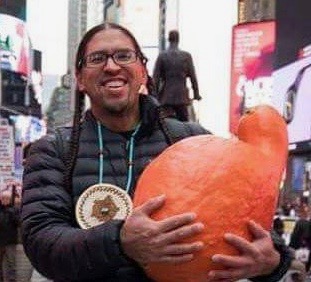

M. Karlos Baca
by   M. Karlos Baca

M. Karlos Baca (Tewa/Dinè/Nuuciu)is an Indigenous Foods Activist, founder of Taste of Native Cuisine, and a cofounder of the I-Collective.

January 2024 Edition

Stay Informed. Take Action.

Subscribe to the NDN allies newsletter

Sign up to get our newsletter. Delivered once per month.

We care about the protection of your data and would never sell your email or share it with anyone without your permission.

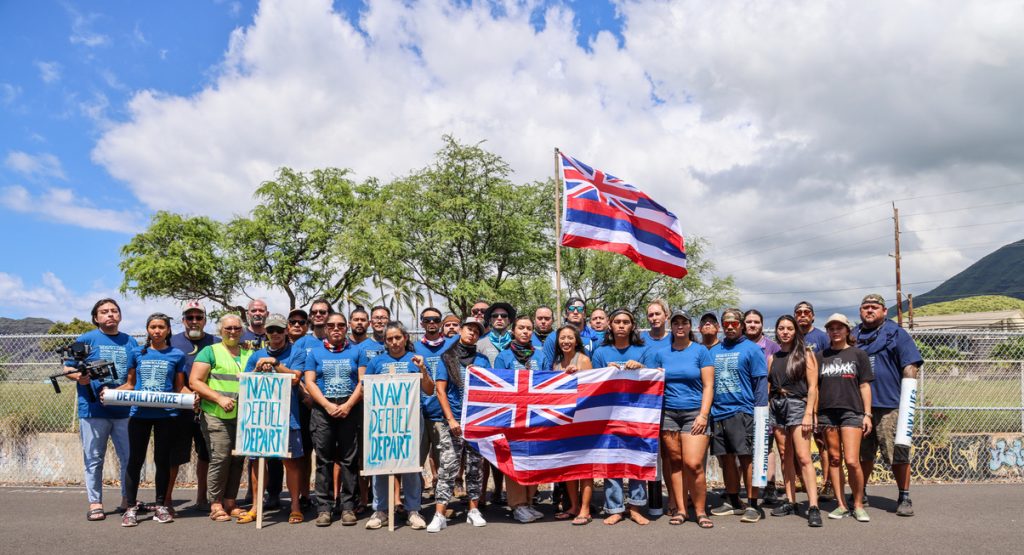
'We Are Not Americans, We Will Die as Hawaiians': Ka Wai Ola a Kāne Launched in Nānākuli, Oahu

Angelica (Angie) Solloa , Kailea Loften

Posted 2 years ago
NDN Collective journeyed to Oʻahu to train and share knowledge with Kānaka Maoli (Native Hawaiian) relatives as an extension of our deep dive work within the region.
'The Medicine Wheel Coming Together': NDN Collective's ȞeSápa Action Camp Builds Community Among Organizers

Jordynn Paz , Sarah Sunshine Manning

Posted 2 years ago
The ȞeSápa Action Camp brought together organizers and movement builders from across Turtle Island and beyond for a week-long training in the Black Hills. There were several trainings offered including Creative Resistance, Tactical Media, Climbing and Blockades.
"Keep Fighting": Leonard Peltier Message to Supporters on 48 Years Since Arrest Posted 2 years ago
Leonard Peltier has been unjustly imprisoned for 48 years on this day. In this letter, he reflects on the anniversary of his incarceration and calls upon all to "keep fighting." Read more for ways you can support the fight to #FreeLeonardPeltier.
NDN Collective Celebrates Mineral Withdrawal Resolution Passed By Oglala Sioux Tribal Council Posted 3 years ago
The Oglala Sioux Tribal Council passes a resolution support the proposed mineral withdrawal around the Pactola Reservoir in the Black Hills. The mineral withdrawal will ban mining in the region for years, preserving the land and drinking water.
NDN Collective Redistributes Nearly $8 Million to Indigenous Peoples Posted 3 years ago
In 2023 the Collective Abundance Fund supported the wealth building of 200 Indigenous Families across Minnesota, North Dakota, and South Dakota.
NDN Collective Redistribuye Casi $8 Millones a Personas Indígenas Posted 3 years ago
El Fondo de Abundancia Colectiva (Collective Abundance Fund) apoya la construcción de riqueza de 200 Familias Indígenas en Minnesota, Dakota del Norte y Dakota del Sur.
Community Mobilizes in Bitter Cold to Shelter Unhoused Relatives in Rapid City Posted 3 years ago
City officials issue warning in response to lifesaving efforts to shelter unhoused relatives from freezing temperatures. This came after city officials claimed they would make temporary changes to their intake policies and promised to not turn people away from city shelters.
NDN Collective Opens 2024 Application Period for Community Action Fund Posted 3 years ago
The Community Action Fund (CAF) furthers Indigenous Peoples’ mobilization strategies as it relates to the defense, development, and decolonization of peoples and the planet. This $1 million fund is available to support such efforts in 2024, with grants up to $40,000.
NDN Collective abre el periodo de aplicación 2024 para el Fondo de Acción Comunitaria Posted 3 years ago
Para su publicación inmediata: 11 de enero de 2024 Rapid City, SD - Hoy, NDN Collective abre el periodo de aplicación para el Fondo de Acción Comunitaria 2024, que proporciona subvenciones urgentes para la acción directa y la organización en…
NDN Collective ouvre la période de candidature 2024 pour le Fonds d’action communautaire Posted 3 years ago
Le Fonds d’action communautaire (FAC) favorise les stratégies de mobilisation des peuples autochtones en ce qui concerne la défense, le développement et la décolonisation des peuples et pour la Terre Mère. Ce fonds d'un million de dollars est disponible pour soutenir de tels efforts en 2024, avec des subventions allant jusqu'à 40 000 dollars. 

United like never before, we rise together—arm in arm—to equip all Indigenous Peoples with the tools needed to become architects of our future. Through a holistic approach to infrastructure, funding, advocacy, movement building, and philanthropy we are fostering a world of justice and equity for all people and the planet.