SKO VOTE DEN: Why voting in NDN Country matters, AND a NEW podcast hosted Jade Begay

Jade Begay · October 1, 2020

SKO VOTE DEN: Why voting in NDN Country matters, AND a NEW podcast hosted Jade Begay

Voting is a complicated topic in NDN Country and yet a critical component of a multi-pronged strategy for building power. To unpack this, NDN Collective announces the Sko Vote Den podcast.

Here at NDN Collective, we believe that in order to see our decolonial, radical, and progressive futures come to fruition, voting has to be a part of our strategy.

That is why we have launched the Sko Vote Den Podcast, a mini-series about voting in NDN Country. We also know that voting is not a black-and-white issue in our communities. It is a sensitive subject because of the legacies of colonial violence that the Federal government has forced upon our people. We also know that to say “get out the vote” in NDN Country actually requires a lot of nuance. 

By speaking with organizers, elders, journalists, and policy experts on the Sko Vote Den podcast, we hope to provide context on why voting in NDN Country is complex and talk about the unique barriers we face in voting. In addition to providing the historical and current background, we will share encouraging messages and information that empowers Native voters to get to the polls this November and to connect the dots between fighting for self-determination and voting.
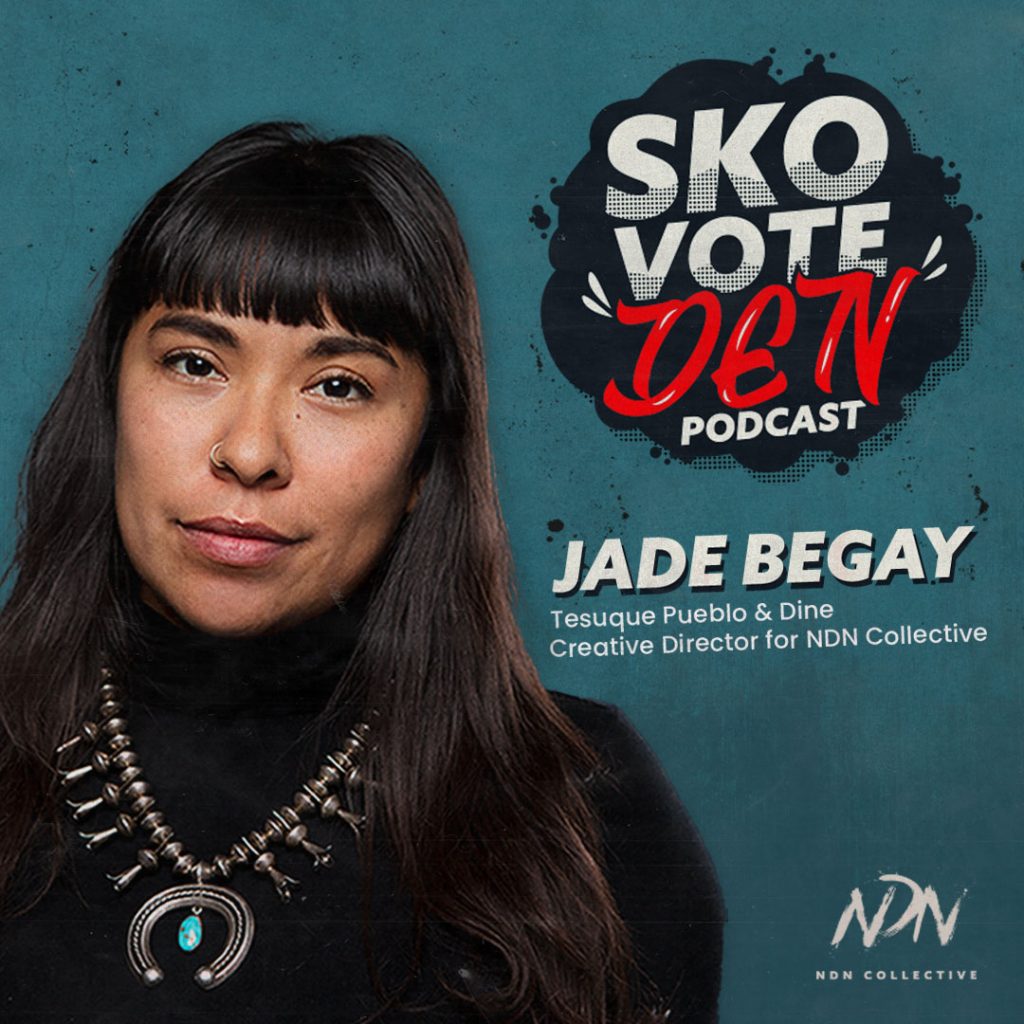
The Sko Vote Den podcast is available on iTunes, Spotify, SoundCloud and wherever you listen to your podcasts.

Over the past few months we have heard the message, “vote as if your life depended on it,” and that sentiment really couldn’t be more true for Native peoples.  Across the country, we are seeing our communities at the frontlines of dangerous and harmful policy, rhetoric, and systemic violence. 

When it comes to the land and the climate, we are seeing the Arctic Refuge, homelands to the Gwichin, being opened for drilling, which would be catastrophic not just for the Gwich’in but for every person on Earth. We are also seeing plans to move forward extraction in the Southwest with uranium mining in Bears Ears and mining in the Boundary Waters of Minnesota, putting not just entire ecosystems at risk of devastation but also putting our cultural lifeways in harm’s way. 

Voting is not a black-and-white issue in our communities. It is a sensitive subject because of the legacies of colonial violence that the Federal government has forced upon our people.

We’re also seeing the dismantling of the Environmental Protection Agency, which means more extraction and pollution and less regulation and accountability for industry. As Indigenous Peoples, we know the realities of extraction in our homelands. We know that environmental racism is a very real reality for our communities and simply put, the harmful impacts of extraction and the climate crisis will only worsen if we do not vote in elected candidates who will listen to our demands and work with us to protect sacred lands and territories. 

When it comes to the health of our communities, COVID-19 proved one thing to be very true: that the denial and carelessness of the virus at the federal level created more suffering than ever necessary. 
In places like Navajo Nation, our communities were hit the hardest because long-standing inequities in health care and infrasture did not prepare us for the pandemic. In places like South Dakota,  tribal sovereignty has been violated by local government, as the Governor of South Dakota tried to punish tribes for protecting their communities. What’s more is the same Governor held a public event in the traditional lands of the Lakota in the lead up to the Fourth of July, during a time when infection rates were high, and encouraged participants to not wear masks. This was a clear act of carelessness and disrespect to local Indigenous Peoples who did not welcome the event in the first place.

Last but not least, when it comes to our right to protest the systems that are not working and being able to speak truth to power, or  when it comes to taking a stand for our self-determination, we are seeing a growing effort to silence our people, Native and non-Native alike. From Mt. Rushmore, to Portland, to the U.S./Mexico Border, we are seeing our relatives, who are organizing and mobilizing for dignity and equity, met with militarized police violence. 
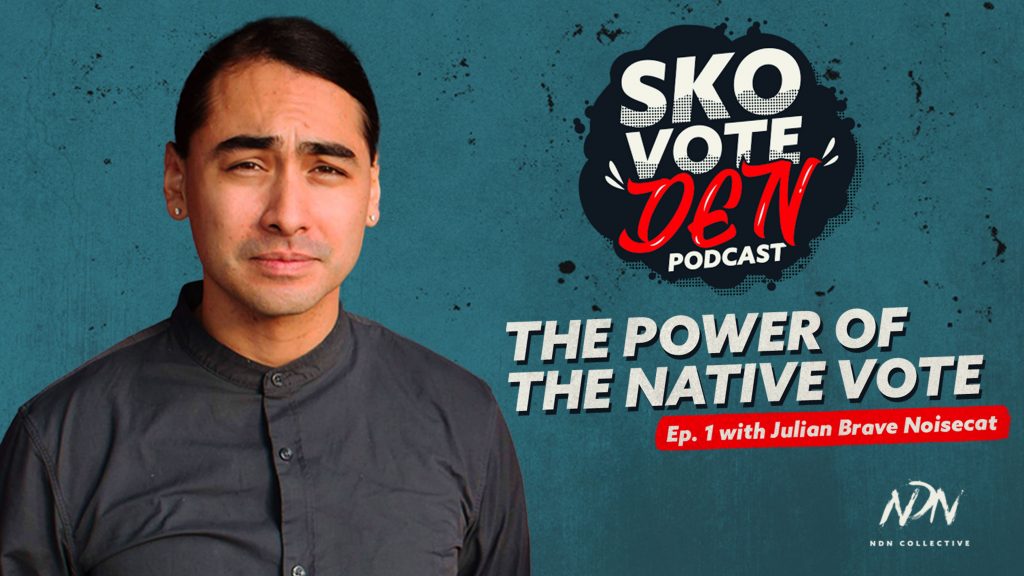
Episode 1 of the Sko Vote Den podcast features Julian Brave NoiseCat.

We are seeing our leaders, like Nick Tilsen, NDN Collective President and CEO, charged with felonies for taking a stand on his traditional treaty lands. We are seeing no justice for those murdered by failing police systems. Rather, those who hold elected office are leaning into authoritarian behaviors and instigating division rather than working to build unity and common ground among citizens. 

This is why we are committed to getting out the Native Vote . We are creating tools like the Sko Vote Den Podcast for our community members to learn about what is at stake and how we can take action to change the political system so that the circumstances are better in 2021 and beyond to build Indigenous power. 

The Sko Vote Den Podcast includes voices like Julian Brave NoiseCat, Judith LeBlanc, Rebecca Nagle and so many more insightful and strong leaders. Please subscribe and listen on Apple Podcasts or Spotify and please help us in amplifying this project.
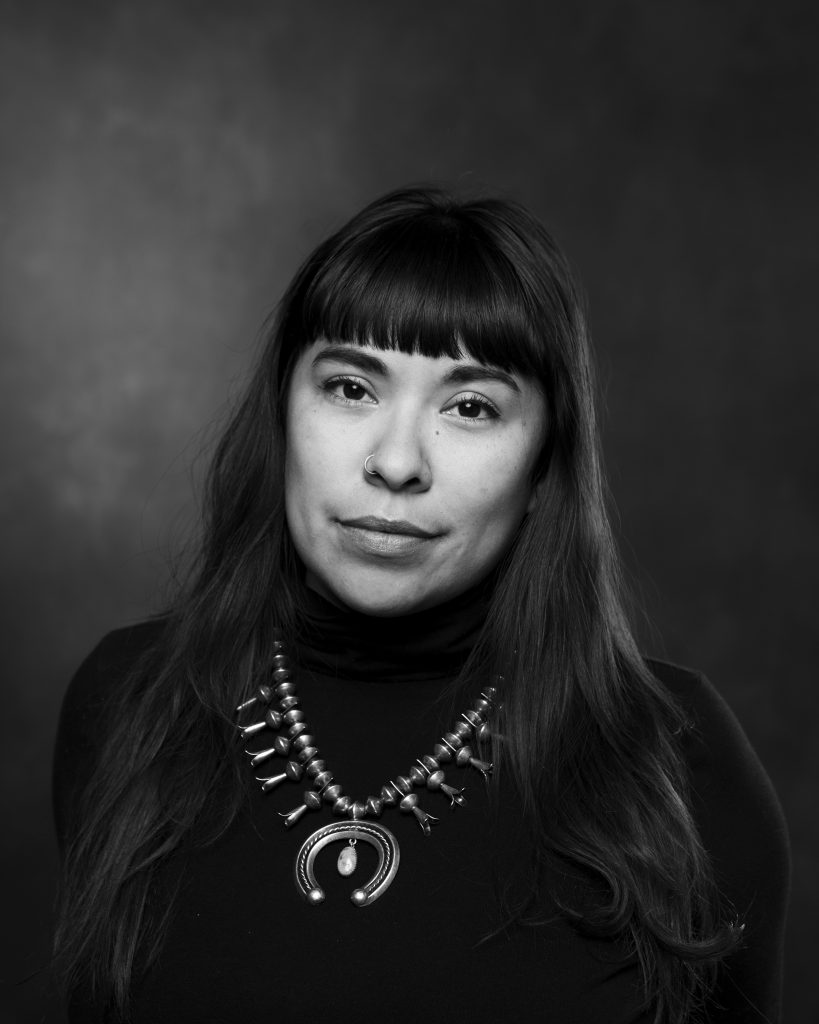
Jade Begay
by   Jade Begay

Jade Begay (she/her), Director of Policy and Advocacy, is a citizen of Tesuque Pueblo and is also Dine and Southern Ute. Jade works at the intersections of storytelling, narrative strategy, climate and environmental justice, and Indigenous rights policy both at the domestic and international level. She has served as the Creative Director and Climate Justice Campaign Director at NDN Collective. Now, Jade directs the Policy and Advocacy work leading programs and projects that elevate policy and advocacy issues that are important to the self-determination of Indigenous Peoples and Tribal Nations.

Jade has a Bachelor’s degree in Film/Video and Communications and a Master of Arts degree in Environmental Leadership. In 2021, she was appointed by President Biden to serve on the inaugural White House Environmental Justice Advisory Council. Jade was named a “Grist Fixer” in 2022 and is a fellow in the Ripe for Creative Disruption: An Environmental Justice Movement Fellowship.

January 2024 Edition

Stay Informed. Take Action.

Subscribe to the NDN allies newsletter

Sign up to get our newsletter. Delivered once per month.

We care about the protection of your data and would never sell your email or share it with anyone without your permission.

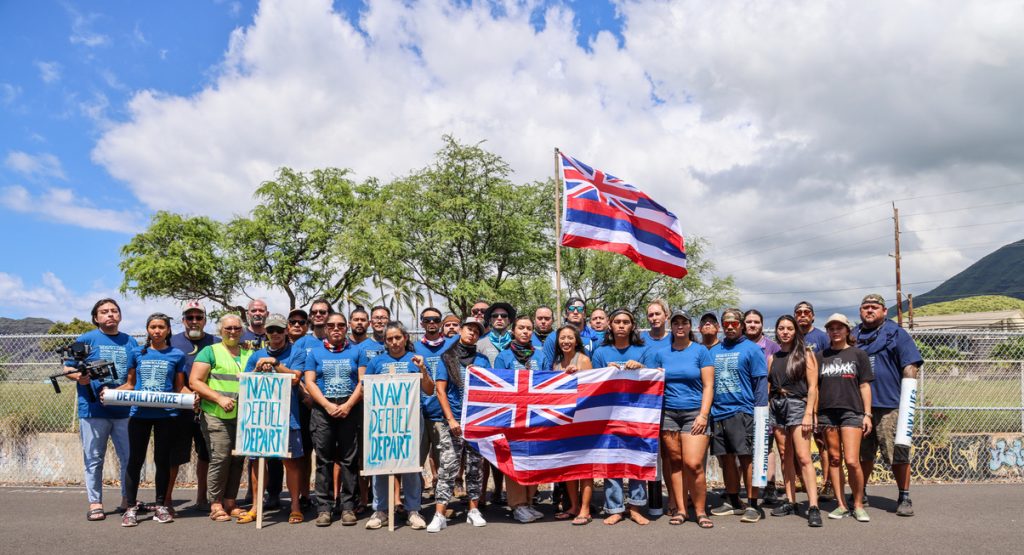
'We Are Not Americans, We Will Die as Hawaiians': Ka Wai Ola a Kāne Launched in Nānākuli, Oahu

Angelica (Angie) Solloa , Kailea Loften

Posted 2 years ago
NDN Collective journeyed to Oʻahu to train and share knowledge with Kānaka Maoli (Native Hawaiian) relatives as an extension of our deep dive work within the region.
'The Medicine Wheel Coming Together': NDN Collective's ȞeSápa Action Camp Builds Community Among Organizers

Jordynn Paz , Sarah Sunshine Manning

Posted 2 years ago
The ȞeSápa Action Camp brought together organizers and movement builders from across Turtle Island and beyond for a week-long training in the Black Hills. There were several trainings offered including Creative Resistance, Tactical Media, Climbing and Blockades.
"Keep Fighting": Leonard Peltier Message to Supporters on 48 Years Since Arrest Posted 2 years ago
Leonard Peltier has been unjustly imprisoned for 48 years on this day. In this letter, he reflects on the anniversary of his incarceration and calls upon all to "keep fighting." Read more for ways you can support the fight to #FreeLeonardPeltier.
NDN Collective Celebrates Mineral Withdrawal Resolution Passed By Oglala Sioux Tribal Council Posted 3 years ago
The Oglala Sioux Tribal Council passes a resolution support the proposed mineral withdrawal around the Pactola Reservoir in the Black Hills. The mineral withdrawal will ban mining in the region for years, preserving the land and drinking water.
NDN Collective Redistributes Nearly $8 Million to Indigenous Peoples Posted 3 years ago
In 2023 the Collective Abundance Fund supported the wealth building of 200 Indigenous Families across Minnesota, North Dakota, and South Dakota.
NDN Collective Redistribuye Casi $8 Millones a Personas Indígenas Posted 3 years ago
El Fondo de Abundancia Colectiva (Collective Abundance Fund) apoya la construcción de riqueza de 200 Familias Indígenas en Minnesota, Dakota del Norte y Dakota del Sur.
Community Mobilizes in Bitter Cold to Shelter Unhoused Relatives in Rapid City Posted 3 years ago
City officials issue warning in response to lifesaving efforts to shelter unhoused relatives from freezing temperatures. This came after city officials claimed they would make temporary changes to their intake policies and promised to not turn people away from city shelters.
NDN Collective Opens 2024 Application Period for Community Action Fund Posted 3 years ago
The Community Action Fund (CAF) furthers Indigenous Peoples’ mobilization strategies as it relates to the defense, development, and decolonization of peoples and the planet. This $1 million fund is available to support such efforts in 2024, with grants up to $40,000.
NDN Collective abre el periodo de aplicación 2024 para el Fondo de Acción Comunitaria Posted 3 years ago
Para su publicación inmediata: 11 de enero de 2024 Rapid City, SD - Hoy, NDN Collective abre el periodo de aplicación para el Fondo de Acción Comunitaria 2024, que proporciona subvenciones urgentes para la acción directa y la organización en…
NDN Collective ouvre la période de candidature 2024 pour le Fonds d’action communautaire Posted 3 years ago
Le Fonds d’action communautaire (FAC) favorise les stratégies de mobilisation des peuples autochtones en ce qui concerne la défense, le développement et la décolonisation des peuples et pour la Terre Mère. Ce fonds d'un million de dollars est disponible pour soutenir de tels efforts en 2024, avec des subventions allant jusqu'à 40 000 dollars. 

United like never before, we rise together—arm in arm—to equip all Indigenous Peoples with the tools needed to become architects of our future. Through a holistic approach to infrastructure, funding, advocacy, movement building, and philanthropy we are fostering a world of justice and equity for all people and the planet.