“We carry the spirit of a People who are victorious!”: Honoring the Battle of Greasy Grass

Brandy Calabaza · June 25, 2021

“We carry the spirit of a People who are victorious!”: Honoring the Battle of Greasy Grass

In a victory that transcends time, the Battle of Little Bighorn would become one of the most studied in history. Known as the “Battle of Greasy Grass” to the Lakota, and as "Victory Day" to many Native people today, this battle would also become a symbol of the continued plight of Indigenous Peoples to retain our traditional homelands, culture, and lifeways.
This year, 2021, marks 145 years since allied bands of Lakota, Dakota, Cheyenne, Arapaho and others defeated the 7th regiment of the US Cavalry led by General George Armstrong Custer. On June 25, 1876, the 7th Cavalry was tasked with removing Lakota and Cheyenne residents from the Little Bighorn River with the ultimate goal of forcing them onto reservations. Yet in a great day of victory for the encamped Tribal Nations, men and even women warriors committed storied acts of courage and bravery that would live on for generations, ultimately defeating Custer and his men that day. 

“Today commemorates a powerful day of victory and unity,” said Krystal Two Bulls (Oglala Lakota and Northern Cheyenne), NDN Collective’s LANDBACK Campaign Director.  “It is a day to celebrate the power of our Ancestors’ coming together to defend our ways of life and protect the land. It is also a day for us to draw from our Ancestors’ sacrifices and prayers to fight our own fights and win our own victories.”

Many of us descend from those who fought on that day.

In a victory that transcends time, the Battle of Little Bighorn would become one of the most studied in history. Known as the “Battle of Greasy Grass” to the Lakota, and as “Victory Day” to many Native people today, this battle would also become a symbol of the continued plight of Indigenous Peoples to retain our traditional homelands, culture, and lifeways. 

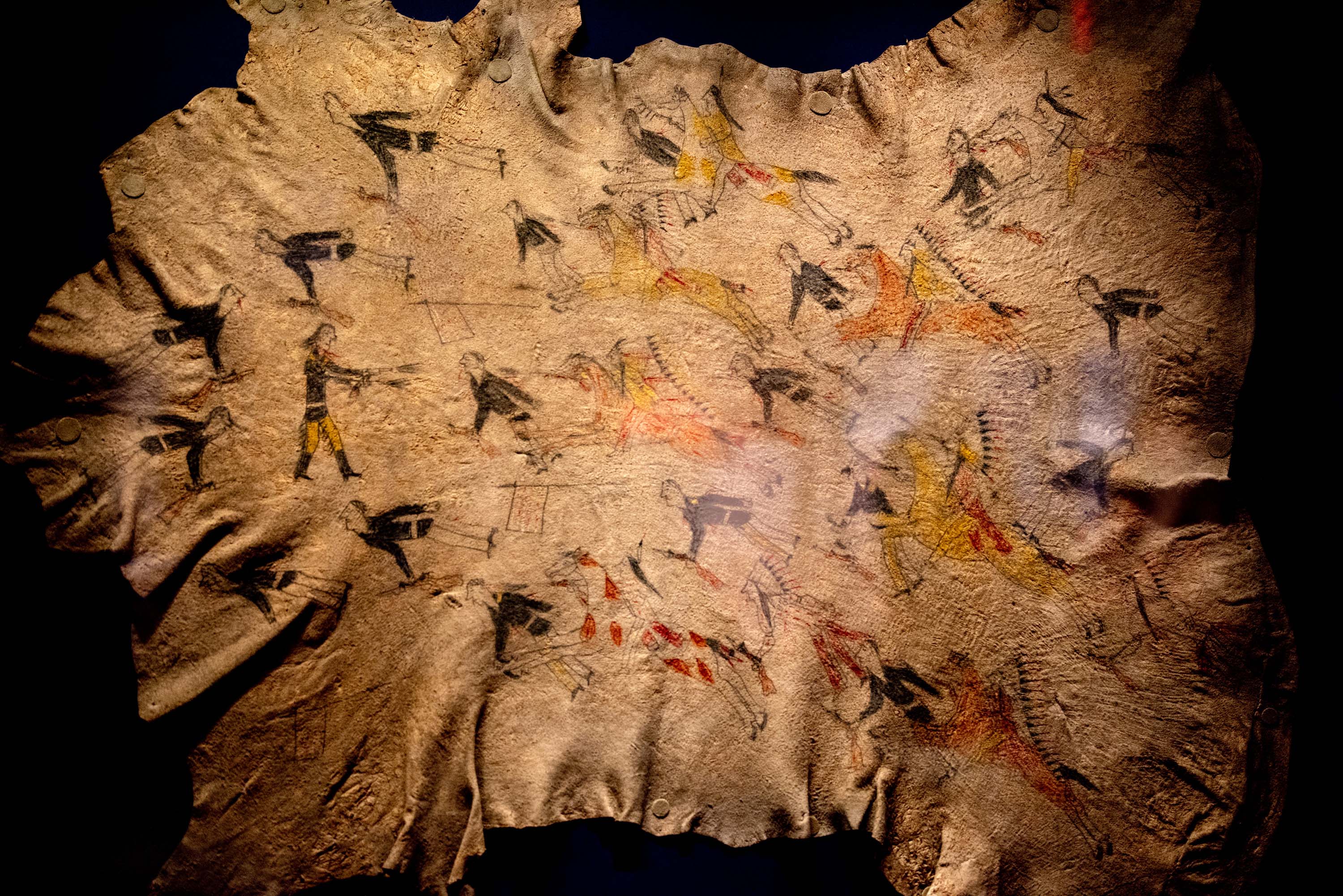
Cheyenne hide painting, commemorating the 1876 defeat of the 7th Cavalry.

On the land surrounding the Little Bighorn River today, there is something about the silence that brings a calming sensation– the way the wind blows through the tall grass, and the light hugs the horizon in such a way that you can feel the spirits of the plains. Seeking to disturb the area on that fateful day in 1876, Custer and his cavalry arrived by horseback, guns at their side. Meanwhile, roughly 8,000 Indigenous Peoples from various Tribal Nations including, but not limited to, the Lakota, Dakota, Cheyenne, Arapaho, were estimated to be present that day. 

In this interview, Ernie LaPointe, great grandson to Chief Sitting Bull, states that the large  encampment along the Little Bighorn River was actually made up of a combination of tribes– more than those few that are often named by historians. Rather, this camp consisted of individuals and families who refused to settle for reservation life. 

“Many of us descend from those who fought on that day,”  said Two Bulls. “Some of us are named after them. I, myself, descend from Chief Gall– master strategist on the battlefield that day.”
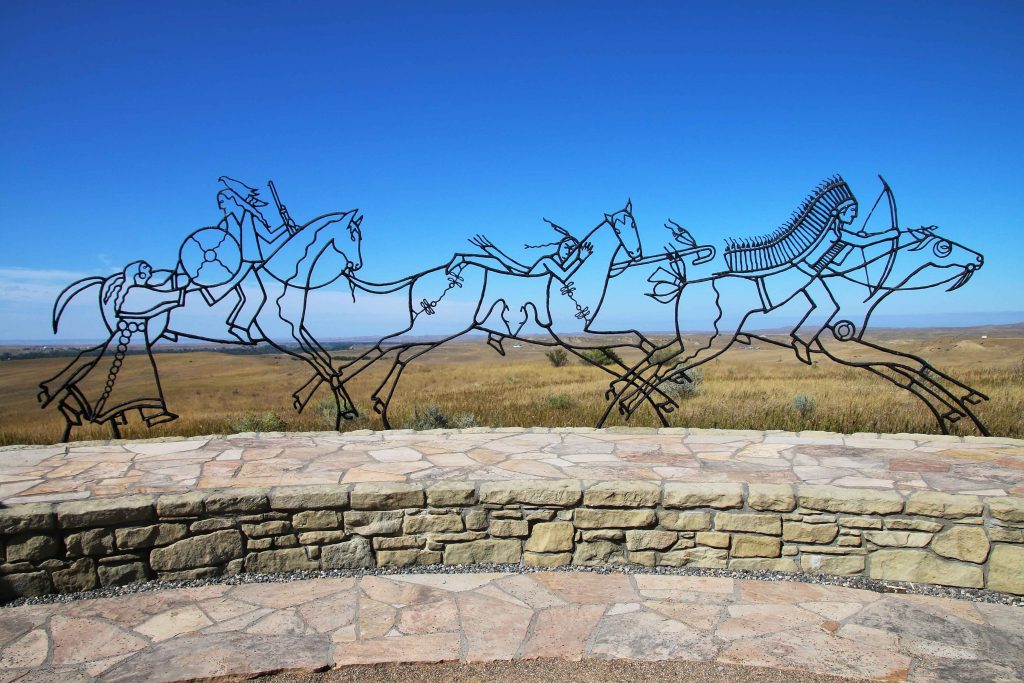
Memorial at the site of the Battle of Greasy Grass/Little Bighorn. Photo by Don Mammoser.

The sheer volume of Indigenous resistance within the mass camp along the Little Bighorn River was grossly underestimated that day, ultimately resulting in the defeat of the 7th Cavalry. 

The definition of a ‘battle’ is “to fight or struggle tenaciously to achieve or resist something.” Resistance was the goal for Indigenous Peoples in this fight, embodied by a collective desire to live apart from white settlers while continuing to protect loved ones who remained at the camp. Remembered in some settler narratives as “Custer’s Last Stand,” this angle overshadows the Indigenous narrative capturing the historical account of this battle, further promoting the concept of Custer as a “Western Hero.” Yet Custer and his men were far from heroes and their violent history of raiding Indigenous villages can be documented in multiple incidents, including one occurring 8 years prior in 1868, when men of the 7th Cavalry attacked an unexpected band of Southern Cheyennes and killed all of the men within the camp including Chief Black Kettle. 

Today is a good reminder that we carry the blood of warriors within us.

The victory that day at the Little Bighorn river, then, was a win for all Indigenous Peoples who were subjected to live in an era of government-determined land ownership– a concept foreign throughout Indigenous cultures. No one owns the land. Instead, we are stewards tasked with the duty to care for the land. Colonizers ignored Indigenous pleas to remain, resulting in many Tribal Nations being swindled by ridiculous treaties filled with false promises and forced to vacate our homelands. 
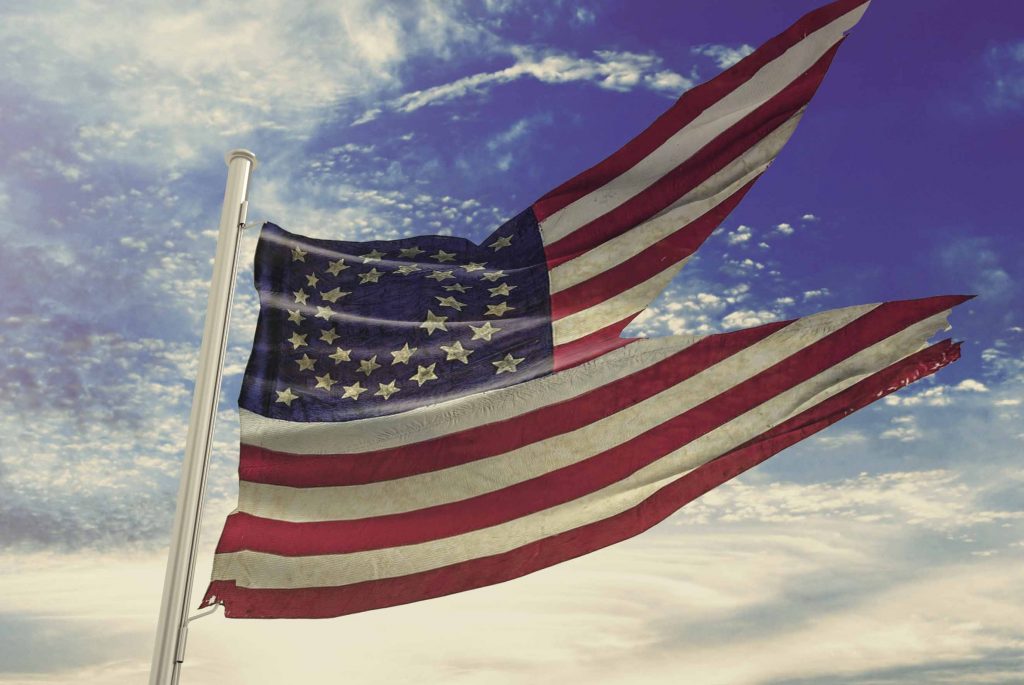
Flag of the 7th Cavalry captured by Warriors at the Battle of Greasy Grass. Image by NDN Collective.

Custer and his men showed up determined to fulfill the goal of displacing Native Peoples that day. But instead, they were met with a resistance that would live on in the oral stories of many Nations.  Instead of simply allowing Custer and his men to ride in, disrupt camp, and bring harm to all individuals residing there, Tribal Nations chose to fight. 

“Today is a good reminder that we carry the blood of warriors within us,” said Two Bulls. “We carry the spirit of a People who are victorious! I call on all of us to continue their fight for LANDBACK, because like the Ancestors’ we descend from, we, too, will be victorious!” 

Brandy Calabaza
by   Brandy Calabaza

Brandy Calabaza (She/Her), Communications Manager, is Jicarilla Apache and Kewa Pueblo from Northern New Mexico. Brandy supports the Communications and Narrative Team with all aspects of content creation, targeted outreach, copywriting, and management of internal communications systems. Her professional background consists of various roles held within her tribal community working with the youth and Nations court. She holds a Bachelor’s Degree in Native American and Indigenous Studies from Fort Lewis College and a Masters of Legal Studies in Indigenous Peoples Law from the University of Oklahoma. Brandy has always held a deep passion for social justice, healing trauma, and Indian Law advocacy. Using her education and the power of storytelling, Brandy aspires to utilize her skills in the continued expansion of narratives that uplift and empower Indigenous sovereignty and self-determination.

January 2024 Edition

Stay Informed. Take Action.

Subscribe to the NDN allies newsletter

Sign up to get our newsletter. Delivered once per month.

We care about the protection of your data and would never sell your email or share it with anyone without your permission.

'We Are Not Americans, We Will Die as Hawaiians': Ka Wai Ola a Kāne Launched in Nānākuli, Oahu

Angelica (Angie) Solloa , Kailea Loften

Posted 2 years ago
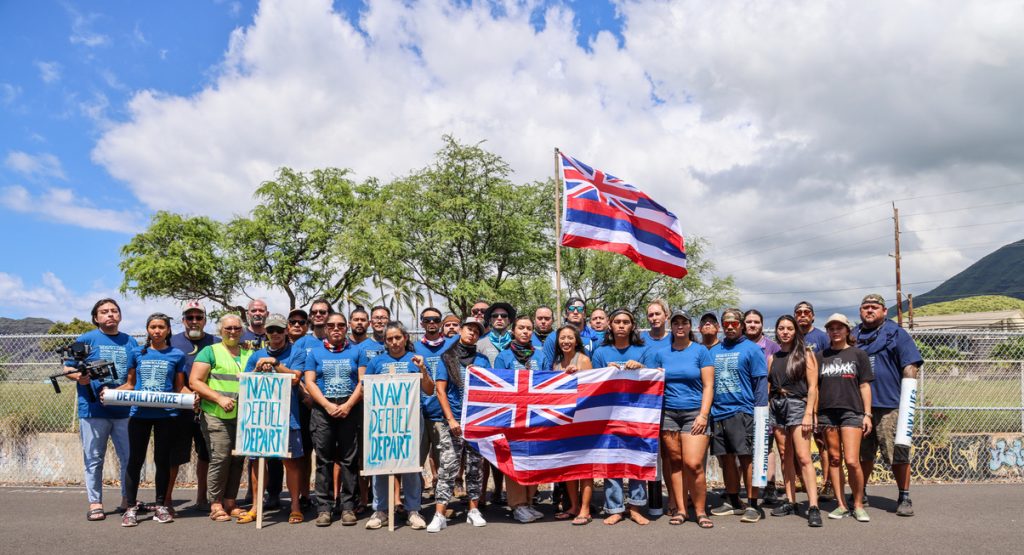
NDN Collective journeyed to Oʻahu to train and share knowledge with Kānaka Maoli (Native Hawaiian) relatives as an extension of our deep dive work within the region.
'The Medicine Wheel Coming Together': NDN Collective's ȞeSápa Action Camp Builds Community Among Organizers

Jordynn Paz , Sarah Sunshine Manning

Posted 2 years ago
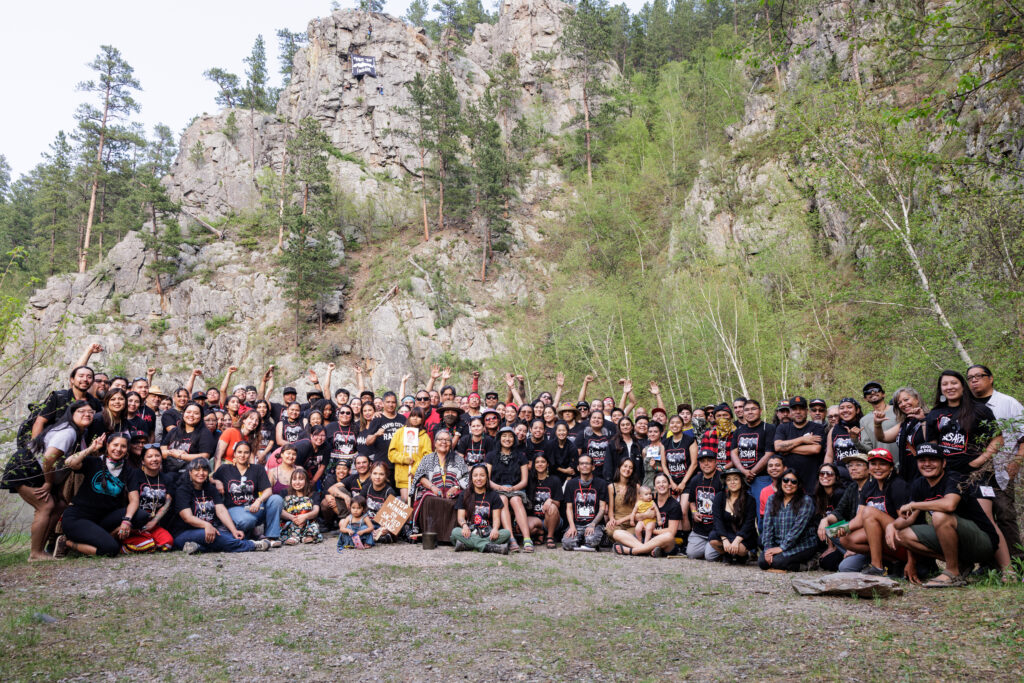
The ȞeSápa Action Camp brought together organizers and movement builders from across Turtle Island and beyond for a week-long training in the Black Hills. There were several trainings offered including Creative Resistance, Tactical Media, Climbing and Blockades.
"Keep Fighting": Leonard Peltier Message to Supporters on 48 Years Since Arrest Posted 2 years ago
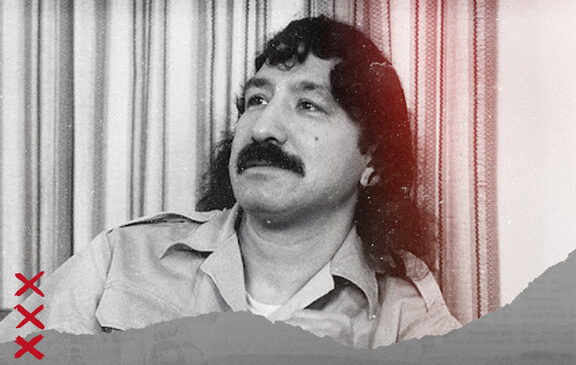
Leonard Peltier has been unjustly imprisoned for 48 years on this day. In this letter, he reflects on the anniversary of his incarceration and calls upon all to "keep fighting." Read more for ways you can support the fight to #FreeLeonardPeltier.
NDN Collective Celebrates Mineral Withdrawal Resolution Passed By Oglala Sioux Tribal Council Posted 3 years ago
The Oglala Sioux Tribal Council passes a resolution support the proposed mineral withdrawal around the Pactola Reservoir in the Black Hills. The mineral withdrawal will ban mining in the region for years, preserving the land and drinking water.
NDN Collective Redistributes Nearly $8 Million to Indigenous Peoples Posted 3 years ago
In 2023 the Collective Abundance Fund supported the wealth building of 200 Indigenous Families across Minnesota, North Dakota, and South Dakota.
NDN Collective Redistribuye Casi $8 Millones a Personas Indígenas Posted 3 years ago
El Fondo de Abundancia Colectiva (Collective Abundance Fund) apoya la construcción de riqueza de 200 Familias Indígenas en Minnesota, Dakota del Norte y Dakota del Sur.
Community Mobilizes in Bitter Cold to Shelter Unhoused Relatives in Rapid City Posted 3 years ago
City officials issue warning in response to lifesaving efforts to shelter unhoused relatives from freezing temperatures. This came after city officials claimed they would make temporary changes to their intake policies and promised to not turn people away from city shelters.
NDN Collective Opens 2024 Application Period for Community Action Fund Posted 3 years ago
The Community Action Fund (CAF) furthers Indigenous Peoples’ mobilization strategies as it relates to the defense, development, and decolonization of peoples and the planet. This $1 million fund is available to support such efforts in 2024, with grants up to $40,000.
NDN Collective abre el periodo de aplicación 2024 para el Fondo de Acción Comunitaria Posted 3 years ago
Para su publicación inmediata: 11 de enero de 2024 Rapid City, SD - Hoy, NDN Collective abre el periodo de aplicación para el Fondo de Acción Comunitaria 2024, que proporciona subvenciones urgentes para la acción directa y la organización en…
NDN Collective ouvre la période de candidature 2024 pour le Fonds d’action communautaire Posted 3 years ago
Le Fonds d’action communautaire (FAC) favorise les stratégies de mobilisation des peuples autochtones en ce qui concerne la défense, le développement et la décolonisation des peuples et pour la Terre Mère. Ce fonds d'un million de dollars est disponible pour soutenir de tels efforts en 2024, avec des subventions allant jusqu'à 40 000 dollars. 

United like never before, we rise together—arm in arm—to equip all Indigenous Peoples with the tools needed to become architects of our future. Through a holistic approach to infrastructure, funding, advocacy, movement building, and philanthropy we are fostering a world of justice and equity for all people and the planet.