Native scholars have asserted that as “American Indian” people, we occupy a liminal status in the United States, neither fully part of the status quo or apart from it, due to our tribal “sovereignty” or government-to-government relationship with the feds. Additionally, as “American Indians” we are held to a system of federal enumeration, often on the basis of blood quantum for membership into a tribe. If we meet the respective benchmarks of our tribe’s enrollment criteria, we are granted the “esteemed” Certificate of Indian Blood (CIB) or tribal enrollment card along with a census number. We are the only segment of the American population that requires proof that we are ethnically who we say we are.
Of course, there are many Native people who don’t hold a CIB and a census number and for a variety of reasons, varying from person to person and tribe to tribe. Unfortunately, if like me and many others, you are more than one tribe, federal law states that you can only enroll in one, and that is usually predetermined when you are born or shortly thereafter.
Although I was raised mostly in Los Angeles due to my grandparents’ participation in the federal relocation program (Indian Relocation Act of 1956), I have been going back and forth to my two respective Pueblos all my life; in summers and for holidays and ceremonial doings. As an adult, I have made a conscious choice to move to New Mexico, first for college, then to live in my Pueblo of enrollment and spend time in my other Pueblo community of which my grandmother hails. I am proud of my heritage and see it as a responsibility to learn as much as I can and participate when and where appropriate.
We are the only segment of the American population that requires proof that we are ethnically who we say we are.
Additionally, I have utilized the “perks” that come with having a CIB including, but not limited to, receiving healthcare at IHS over the years and benefitting from scholarships from my tribe of enrollment, which has enabled me to achieve advanced degrees. For that I am thankful and have spent years working for both my Pueblos, paid and unpaid, “giving back” what was given to me.
It has not always been easy, however, I have found that using my education and skillset to contribute positively has been very beneficial in gaining acceptance into my tribal communities. I’ve also tried my best to be humble, prayerful and open to learning, never professing to know more than I do, but also confident in the belief that I do belong, though some may try to make me feel otherwise.
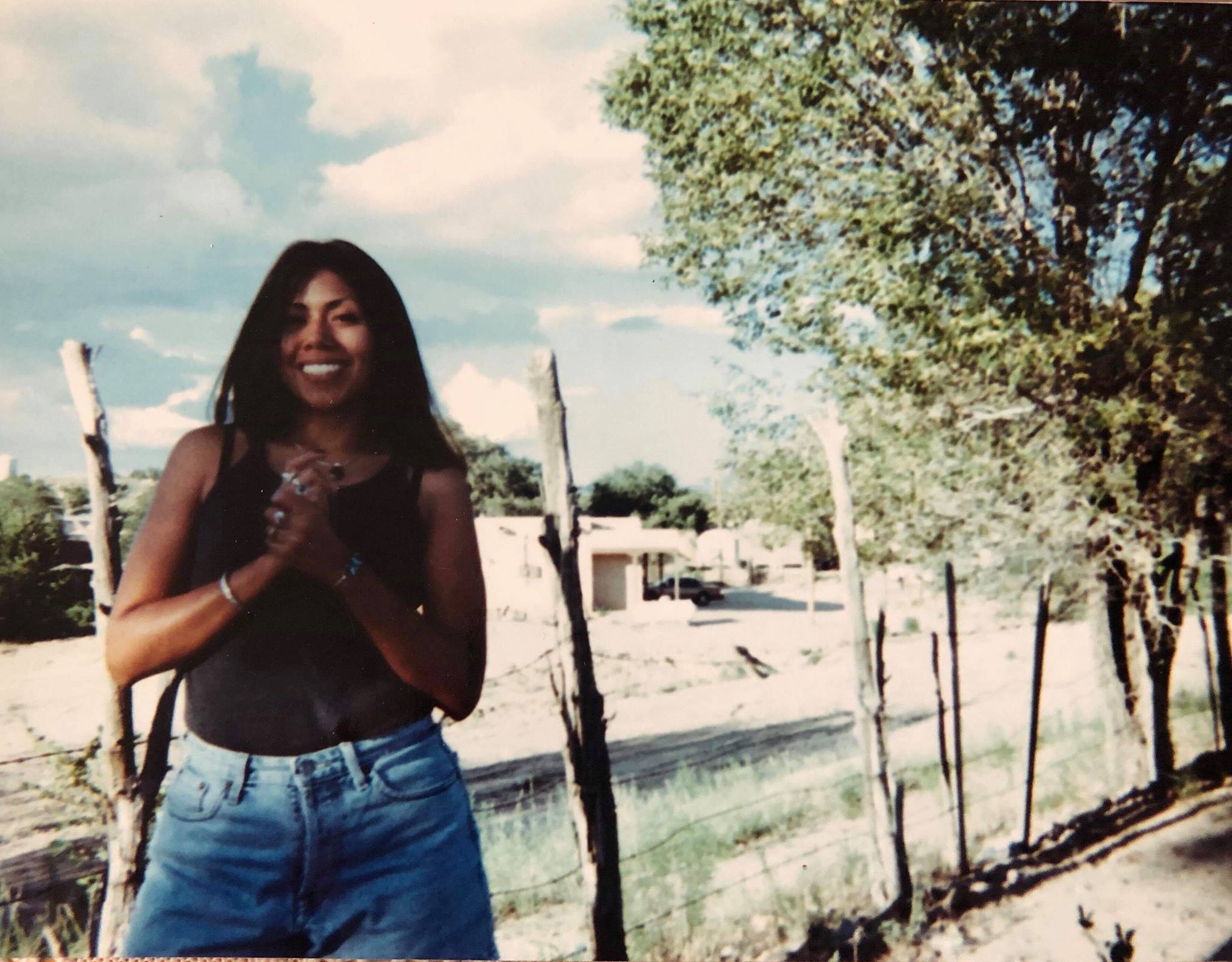
So here’s the dilemma I currently face: As the oldest grandchild and the only one who participates traditionally, my grandmother wants to bequeath me a small, yet incredibly beautiful parcel of land that was given to her by her stepfather who raised her. However, because I am not enrolled in her tribe, rather my grandfather’s, I could not feasibly inherit said land unless I disavowed my status in my other Pueblo and enrolled in hers; that is if they would even accept me. Furthermore, since I am only ¼ blood quantum of said Pueblo (the minimum amount required for tribal enrollment), even if I were to enroll there and inherit said land, unless blood quantum criteria changes or expands, the land would fall out of my hands anyway once I die, lost to our family forever.
What is particularly interesting to me about the land is that when my grandmother was initially given the parcel, sometime in the eighties, she said she didn’t think much of it, having already lived in California for so long. She expressed to her stepfather that she didn’t know if she would ever return to live in Taos, to which he had profound response: “Perhaps not you, but maybe one of your children or grandchildren will want to come home.”
I’ve been ruminating on this statement for sometime now. Was he able to foresee a future where our people would actively return to our ancestral homelands?
“Perhaps not you, but maybe one of your children or grandchildren will want to come home.”
Several decades later, I’m being asked to make complicated decisions about the very thing he foreshadowed. Having spent years integrating myself into my Pueblo of enrollment and gaining acceptance having not grown up there, has been a great honor; one that I don’t take lightly for it has made me who I am today. The possibility of having to dis-enroll and enroll in my other Pueblo to inherit this land is a tough reality to have to consider. And even at that, there is no guarantee the land will be granted to me for a variety of reasons having to do with my grandmother living in Los Angeles and being gone for so long, thereby being deemed an “inactive” tribal member.
There are obvious flaws in the logic of tribal enrollment by blood quantum. In light of this, I wonder: What about all the other Native people like me who have more than one tribal community they call home? Are we meant to stay in one place? Historically, our people have always migrated and adapted with changing times. Furthermore, what does the future hold for an increasingly mixed-blood and even multi-tribal population?
Because of our connection to place and to our ancestors, our genetic memory, if you will, some will always return “home.” This is inevitable. It is the journey I have been on for most of my adult life. This calling to return to my roots didn’t always make sense to me, but I have since learned to stop questioning it. I have other relatives that grew up in the city, who express a desire to return to their tribal communities. For those that do have the heart to return home, will they be accepted? Will they have to make these difficult choices, such as the one I am being asked to consider?
While we can’t erase the lasting effects of federal policy, we can certainly make a conscious choice to redefine our identity as Native people beyond the governmental imposed and controlled “American Indian,” quantifiable by a certain amount of perceived blood. I have no choice but to be hopeful that the future will be more inclusive for the changing face of Native identity. It is my hope that my story will help people understand the complexities of mixed-blood Native identities and open our hearts and minds to solutions that align with our core values as Indigenous people connected to this beautiful and sacred land.