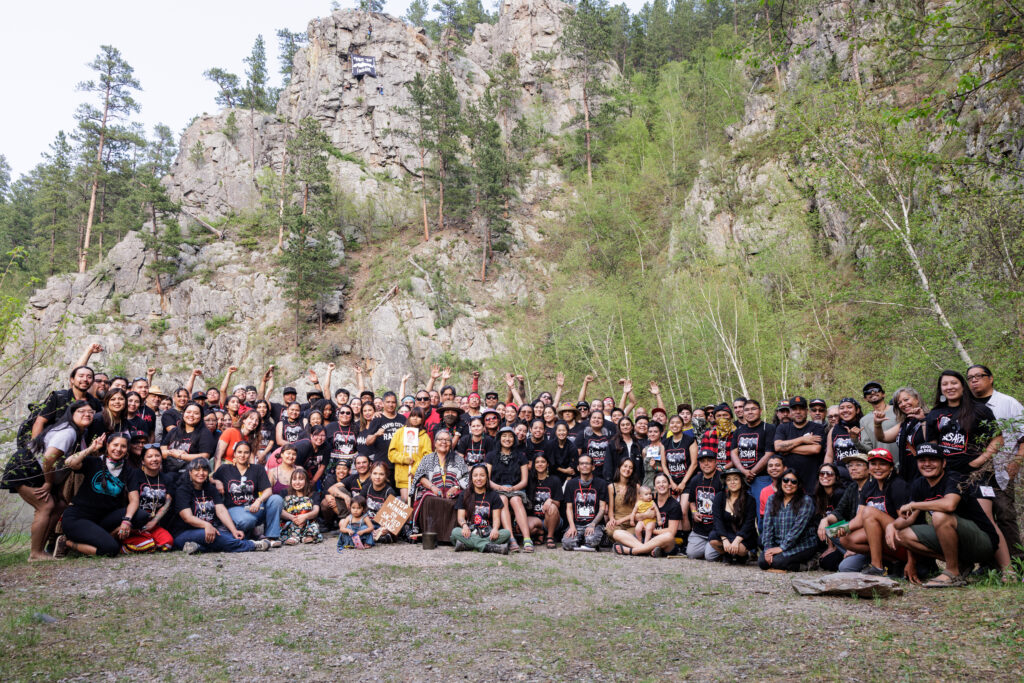
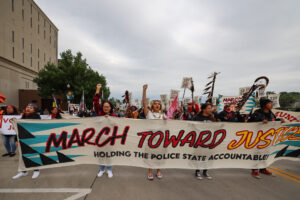
On July 4th, so-called Independence Day, Indigenous organizers and allies took to the streets of downtown Rapid City, South Dakota in the March Toward Justice. Guided by the encouragement and wisdom of Lakota Elders, participants in the march prayed, sang, danced, and raised their collective voices, demanding justice for Indigenous victims of systemic racism and police violence in Rapid City.
Across Turtle Island, we are still reeling from the Supreme Court’s rulings on LGBTQ discrimination, denial of financial support for students, and canceling affirmative action admission programming. The highest court’s decisions have a ripple effect on the racist systems that exist on a local level in the Oceti Sakowin territory, and Mni Luzahan (AKA Rapid City) specifically.
For generations, our relatives have been impacted by waves of grief and mourning from police violence, murders, and missing relatives. In South Dakota, from 2001-2023 there have been 79 police-involved shootings statewide, 0 convictions of police officers, additionally, 75% of the fatal shooting victims were Indigenous people.
“These killings by police are not distant. It’s down the block from us or across the street at the gas station. It happens in the neighborhoods we work and live in,” said Sunny Red Bear, NDN Collective Local Organizer. “We hear the reports over the scanner, the sirens blaring and the slow, sad ambulance, off to the hospital again. The people hold vigils and circulate the funeral postings. The community has reached the limit of what it can tolerate.”
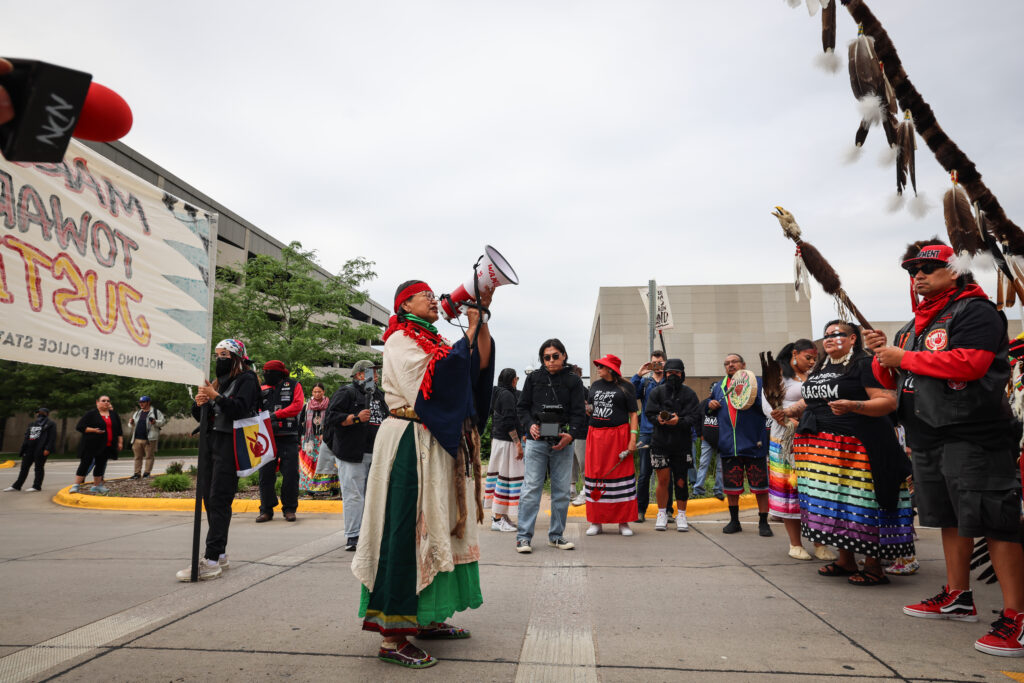
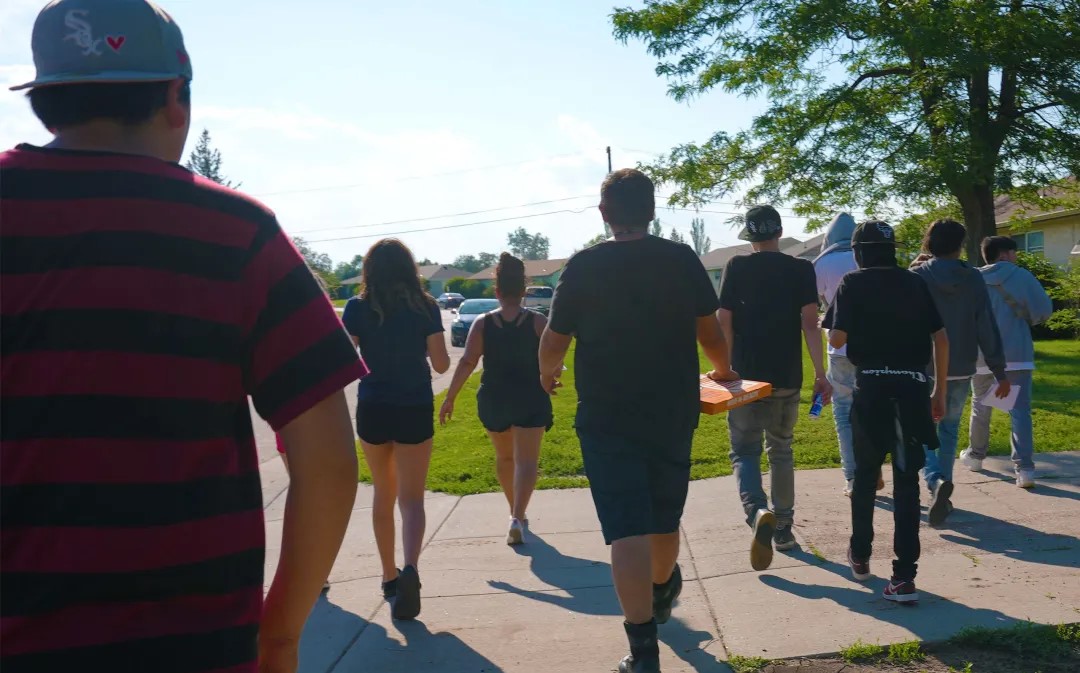
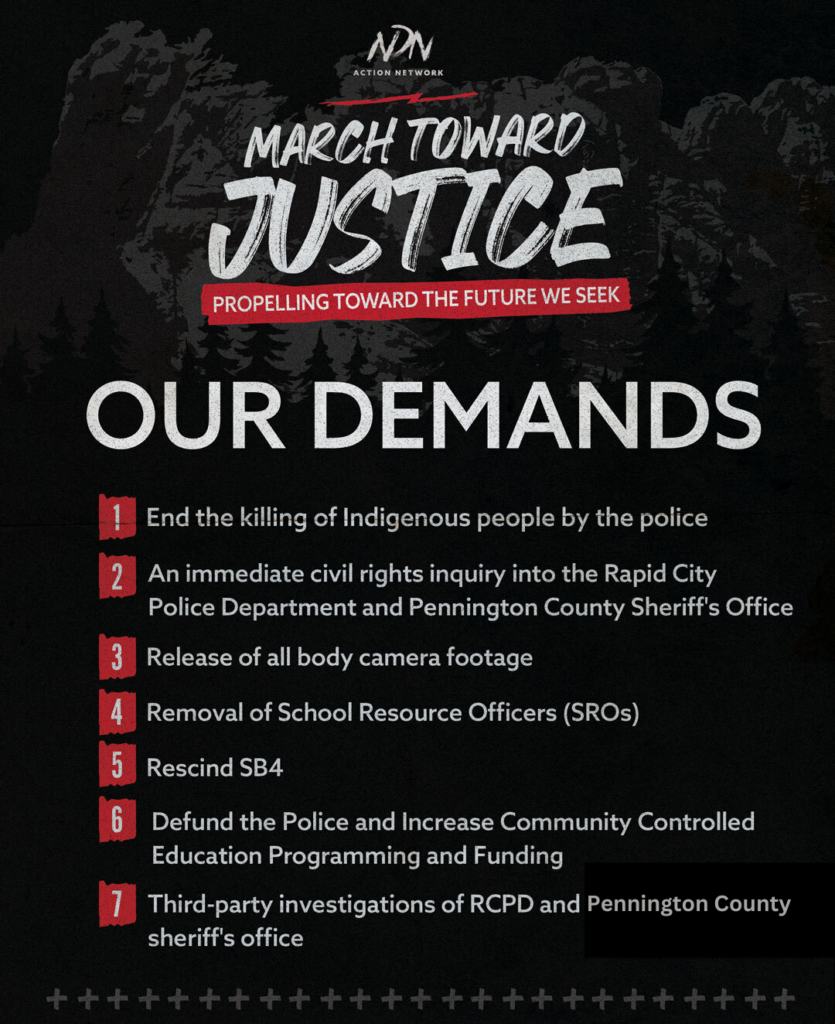
Leading up to the march on July 3rd, a March Toward Justice press conference was held to emphasize the demands and elevate the voices of the community. Dozens of Wambli Ska Society members supported outreach efforts. Wambli Ska Society is a local Indigenous-led organization focused on cultivating community services such as a teen center, street outreach, and violence prevention through the revitalization of culture.
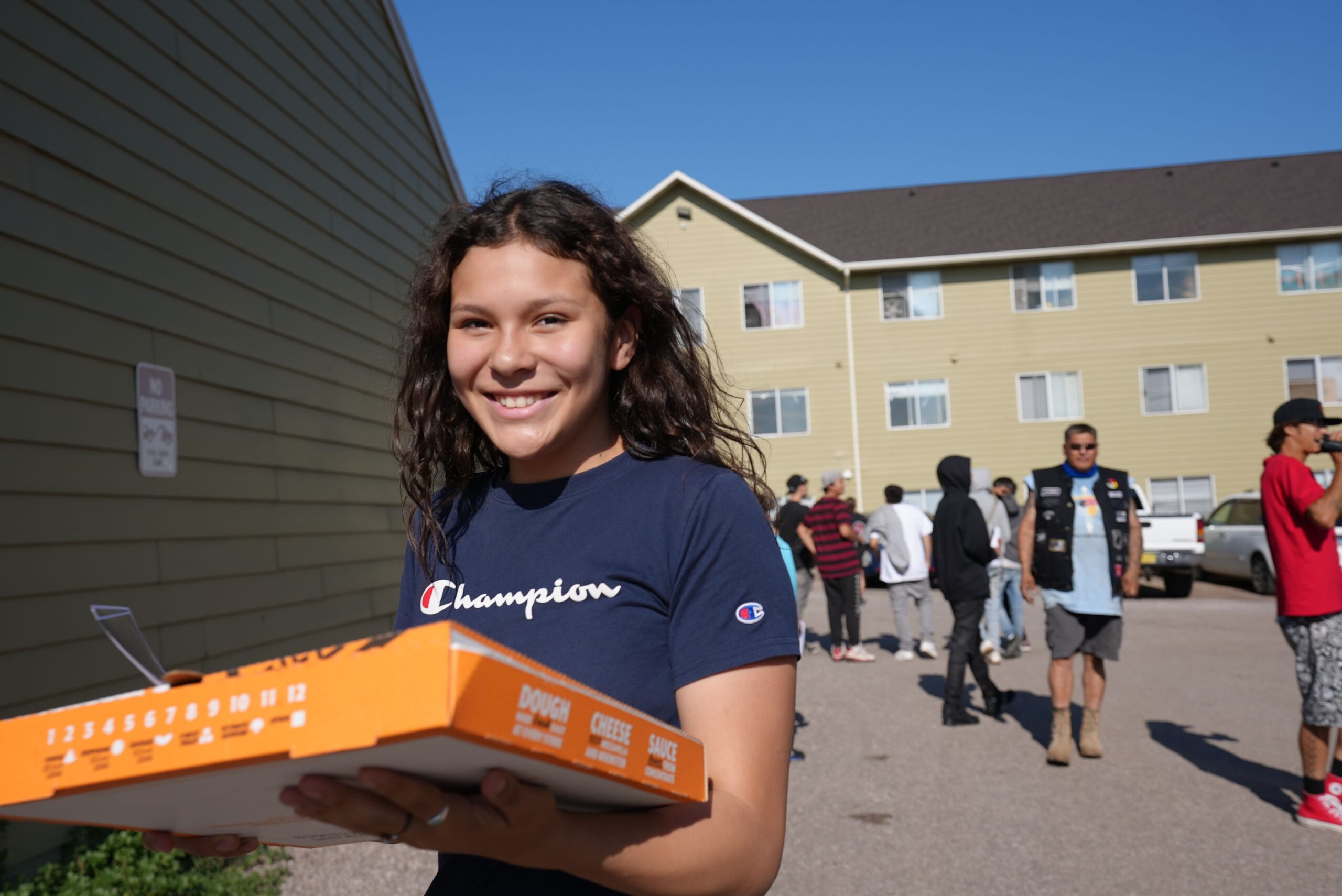
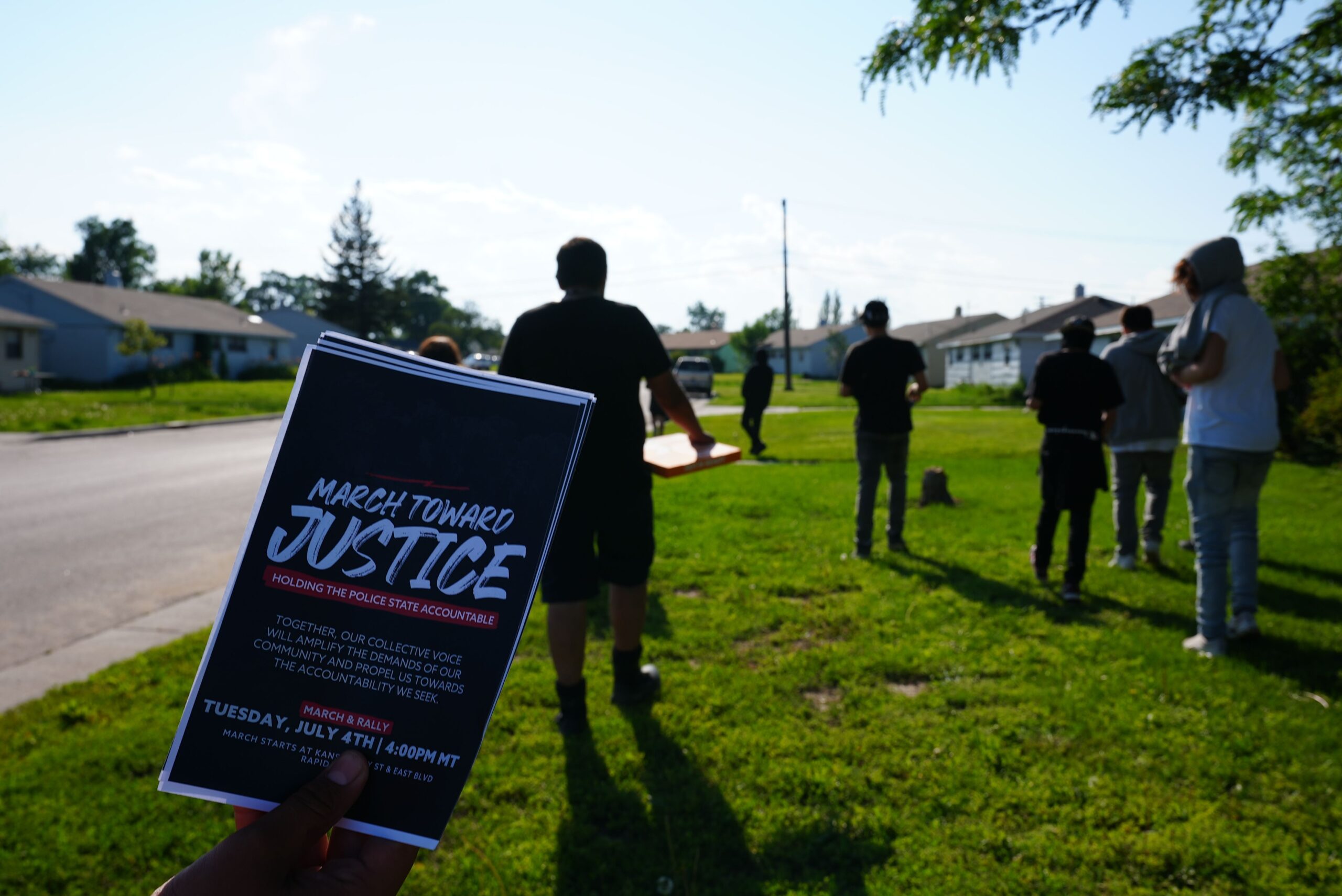
On the day of the press conference, Indigenous organizers and allies loaded up into trucks with LANDBACK and American Indian Movement flags, boxes of pizza, and over 700 flyers to invite relatives and the local community to the March Toward Justice.
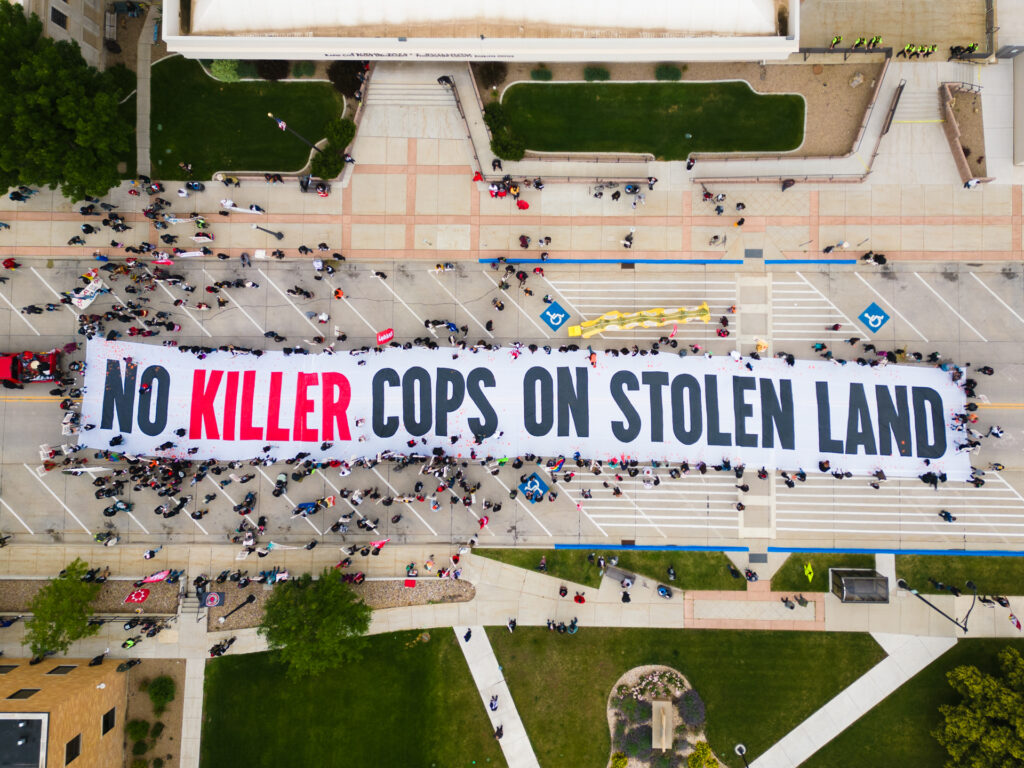
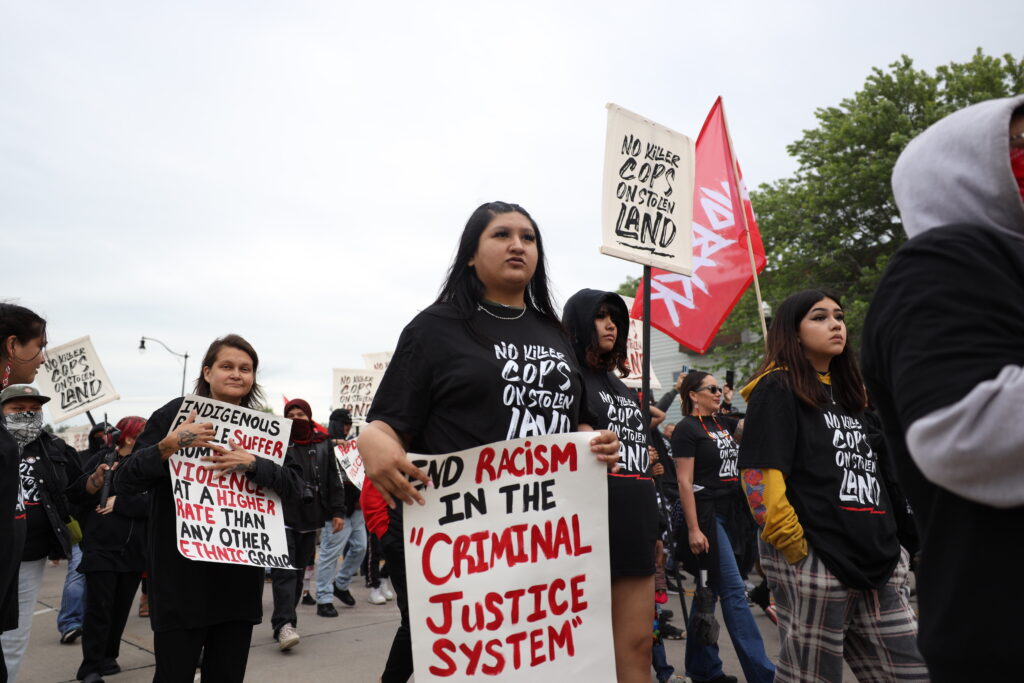
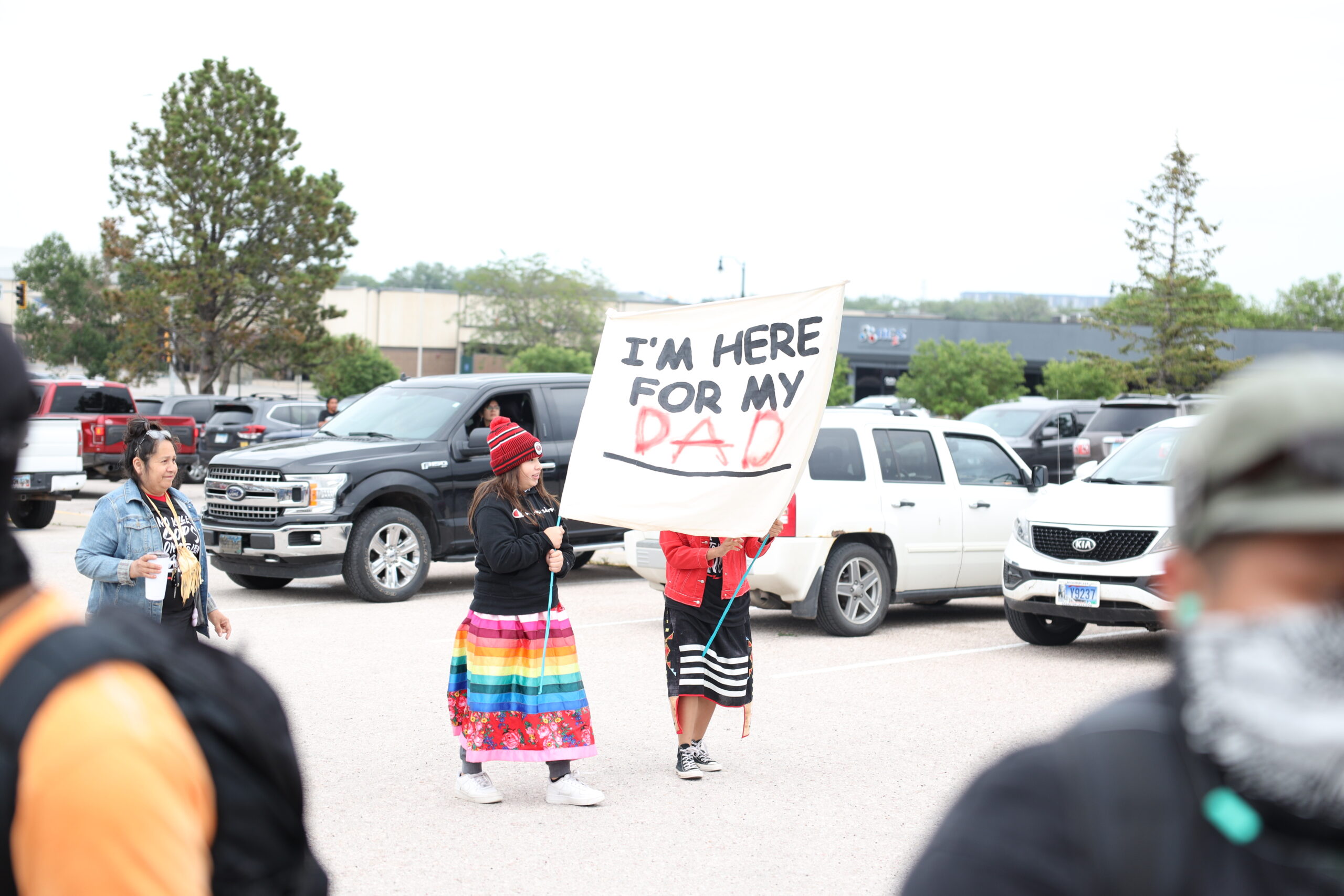
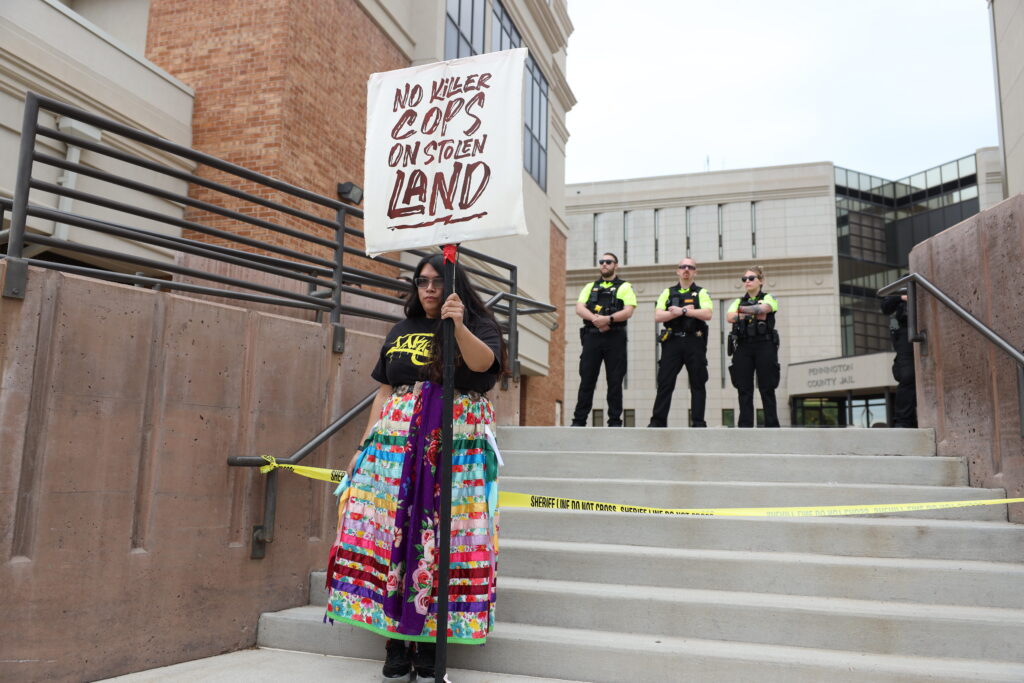
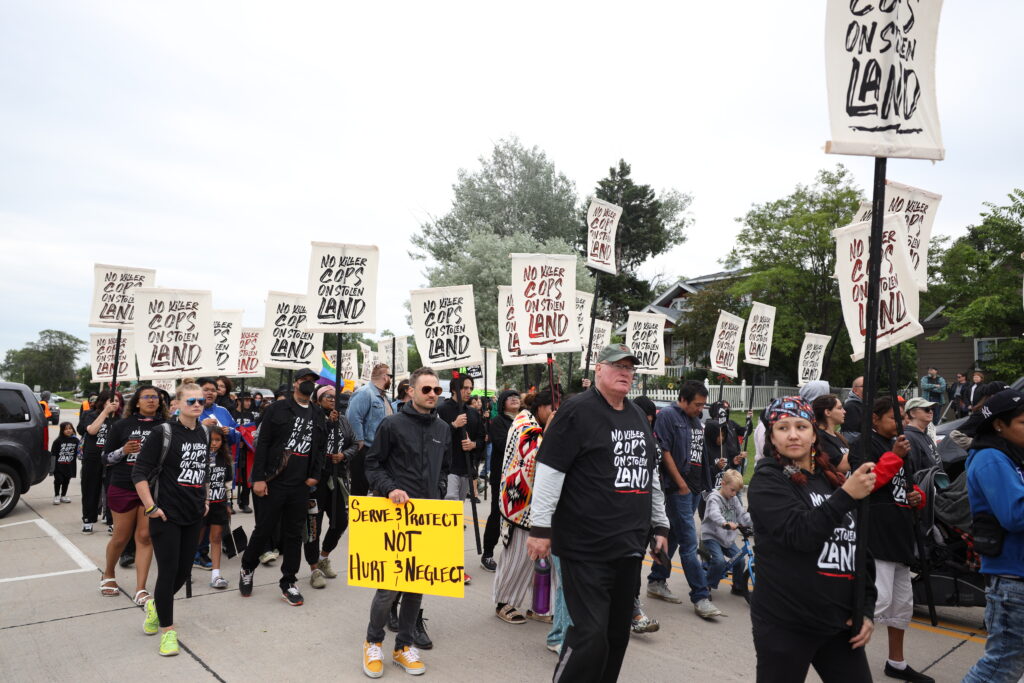
During the March Toward Justice, relatives of all ages held signs that read “No Killer Cops On Stolen Land,” which unequivocally speaks to the police murders and systemic racism perpetrated by Rapid City Police and the US government, who have consistently and illegally broken treaties.
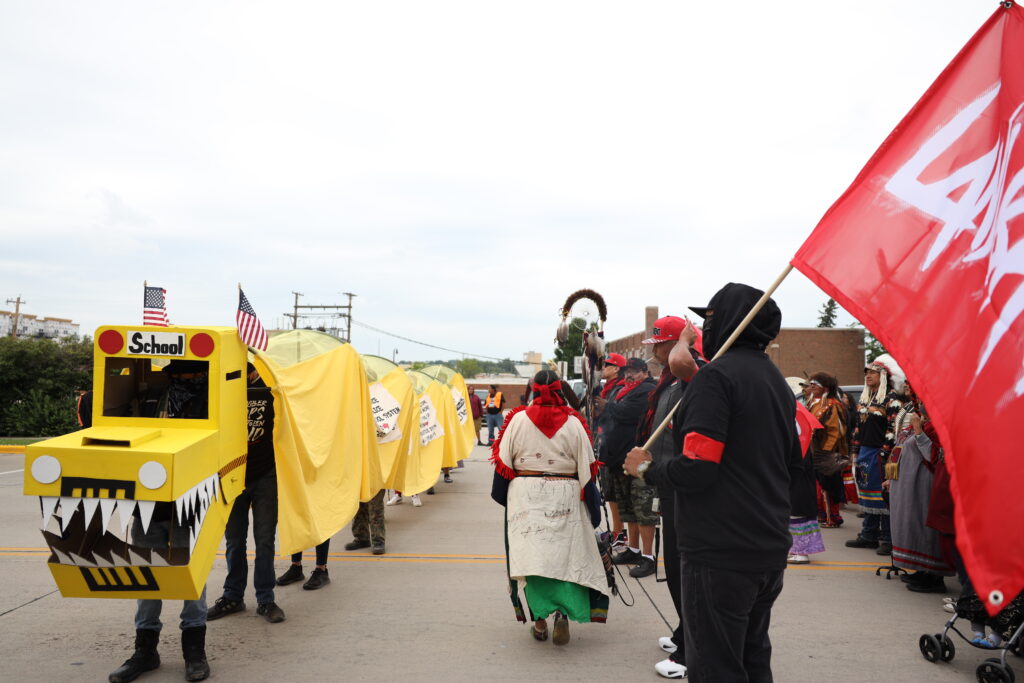
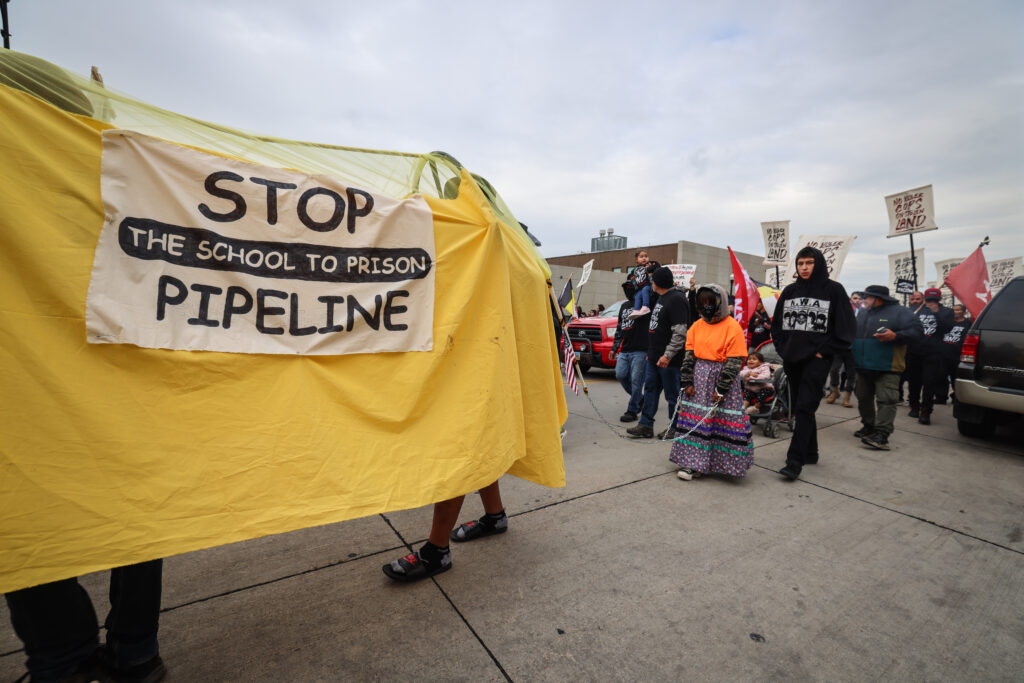
Other community members held handmade signs and banners that identified family members who were harmed by the Rapid City Police Department– the reason they were marching. Youth participants led a puppet school bus representing the school-to-prison pipeline. The bus puppeteers pranced around the march, with messaging on the bus outlining facts about youth incarceration, followed by a young relative chained to the end of the bus.
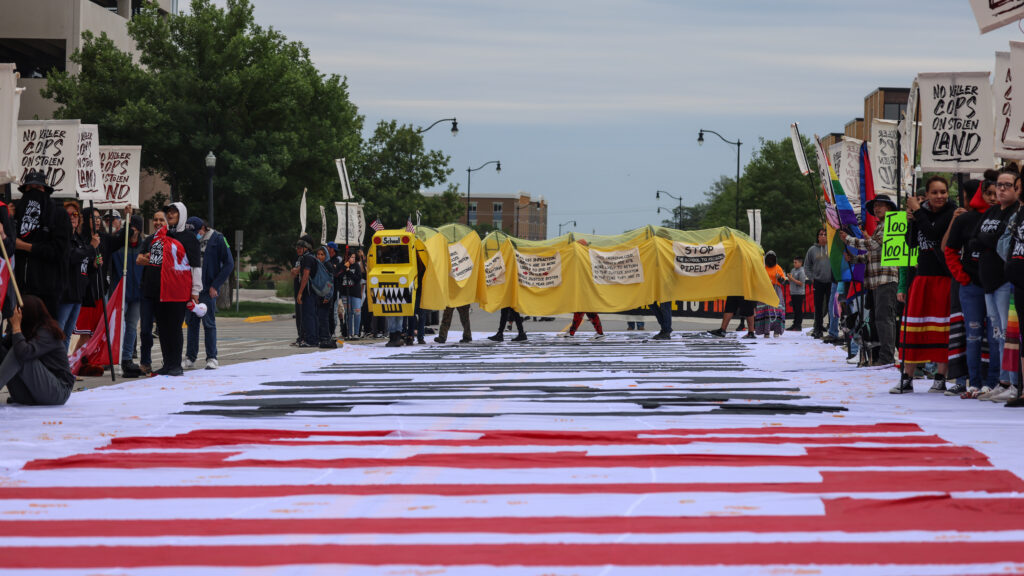
The bus puppet points to a glaring statistic: The 3,000 Indigenous students currently enrolled in Rapid City Area Schools make up only 17% of the school population; Yet, they are the most heavily disciplined, and represent 100% of school expulsions. Student Resource Officers (SROs) in the schools, serve as an extension of the police, and are directly connected to the school-to-prison pipeline for Indigenous students.
“Every school has at least one School Resource Officer, and based on their job description, SROs are supposed to foster a safe community,” said Anissa Martin, NDN Collective Local Organizer at the March Toward Justice press conference. “But we’re here to tell you that that’s not happening. There have been many cases in which SROs have been violent and are inflicting more harm than good.”
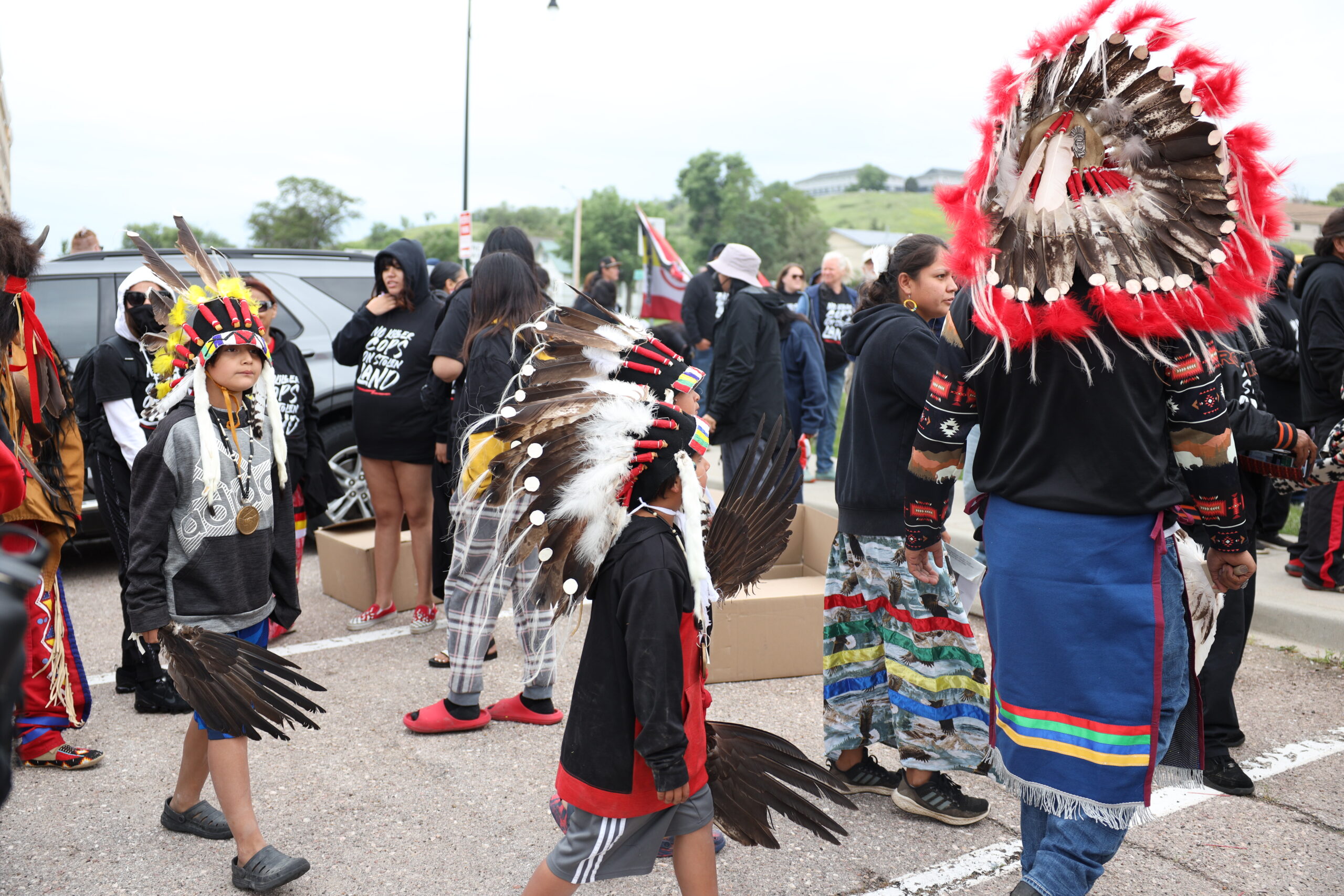
At the march, families and wakanheja (children in the Lakota language) showed out by the hundreds, standing in solidarity alongside 70+ organizations who signed on to a letter calling for police accountability.
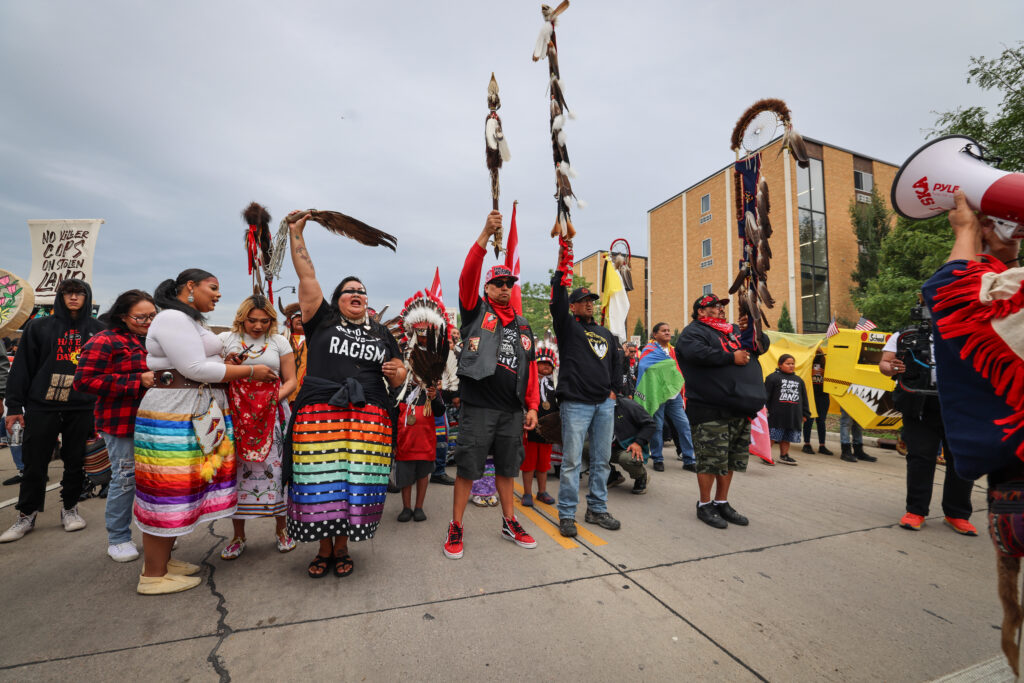
Cante Heart, a local activist and organizer, asked those with eagle bone whistles, eagle staffs, and sacred pipes to the front of the march to lead. This is sundance season for many Indigenous Nations of the Great Plains and ceremonies are being held all over so-called South Dakota.
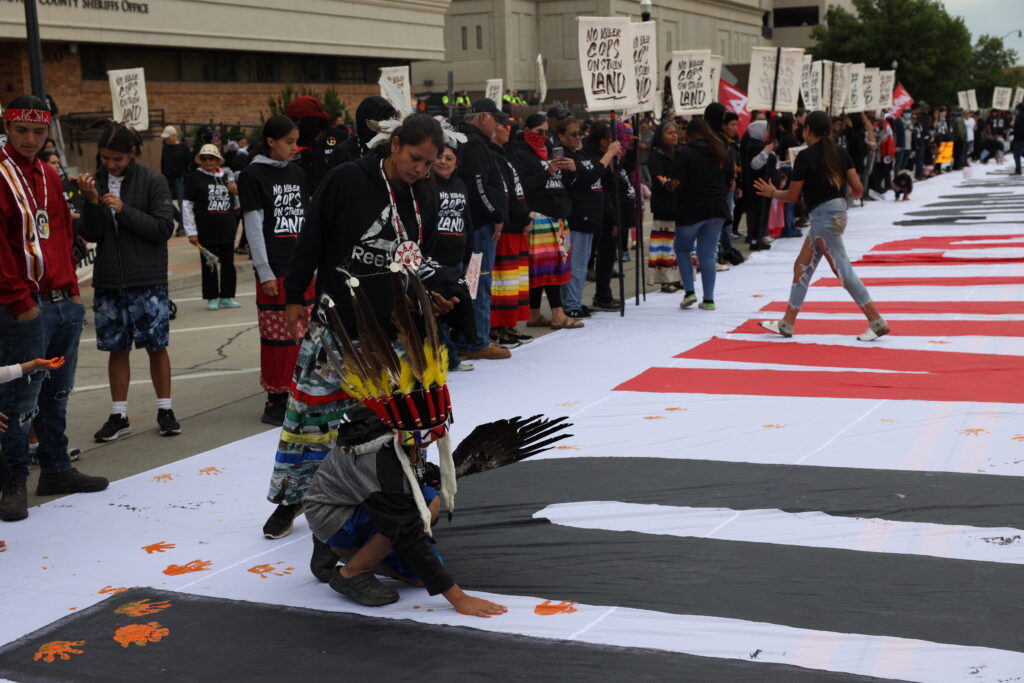
While the peaceful and prayerful marchers headed towards the Rapid City Police Department and the Pennington County Sheriff’s office, they unfurled a 200 foot x 25 foot banner along the road that read, “No Killer Cops On Stolen Land.” After the banner upfolded, a round dance occurred where participants, led by drum group Good Medicine, circled the banner in front of the Rapid City Police Department. Simultaneously, youth placed their handprints in orange paint along its border to call attention to the parallel experiences of young people today and our young relatives who went missing or were murdered at residential schools.
As the march proceeded past the Pennington County Jail, incarcerated relatives banged on their cell windows above the crowd, adding their voice to the movement from inside the prison walls, despite the inhumane consequences they would experience because of it.
Our incarcerated relatives are one of the main reasons why we do this work locally and nationally. In South Dakota, Indigenous people are only 10% of the population, but comprise 51% of the prison inmate population.
“We have to remember this isn’t just the Rapid City Police Department who continuously murders our relatives,” said Hermus Bettelyoun, NDN Collective Local Organizer “We need to look at the entire system that protects murderers who hold a badge. And it’s not just the police. It’s much bigger than that.”
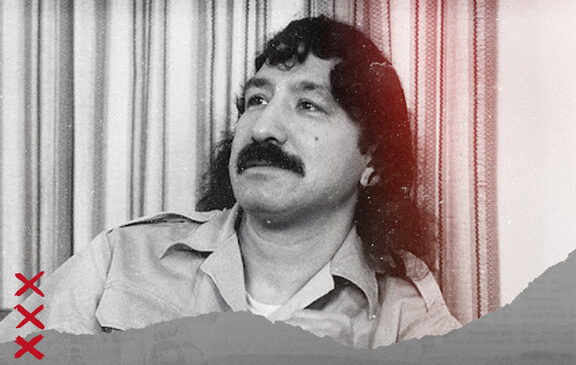
Racial profiling, targeting, and the intentional incarceration of Indigenous relatives is the continuation of settler colonialism and white supremacy. Leonard Peltier has been caged for 48 years, one of the longest sentences served by an Indigenous political prisoner. We are as committed to the movement calling for his clemency as we are to our demands for police accountability.
When asked, “What do you think is the biggest misconception by non-Indigenous people about what is going on here [today]?” and “How [they] feel about the land,” Stephanie Yellow Eagle, Local Organizer with the Lakota Lockup Project responded, “They don’t see the systemic racism that’s within the criminal justice system, so I feel like that has a lot to play in why there are so many people incarcerated in prisons and jails, foster care homes, forced treatment centers– the list goes on and on. It’s our land! Follow the treaties! We wouldn’t be doing this type of stuff if everybody just followed the treaties.”
The March Toward Justice illuminated what can happen when we come together as relatives in our full power and take to the streets on Indigenous lands, with our prayers, demands, and hearts. We know the truth. We keep us safe– no police or permits needed.
We invite all relatives to join us in ensuring that our demands for police accountability in Mni Luzahan are met.
WATCH THE FULL NDN LIVE: MARCH TOWARD JUSTICE: HOLDING THE POLICE STATE ACCOUNTABLE
More Photos from the March Toward Justice
Click on Photos to Expand
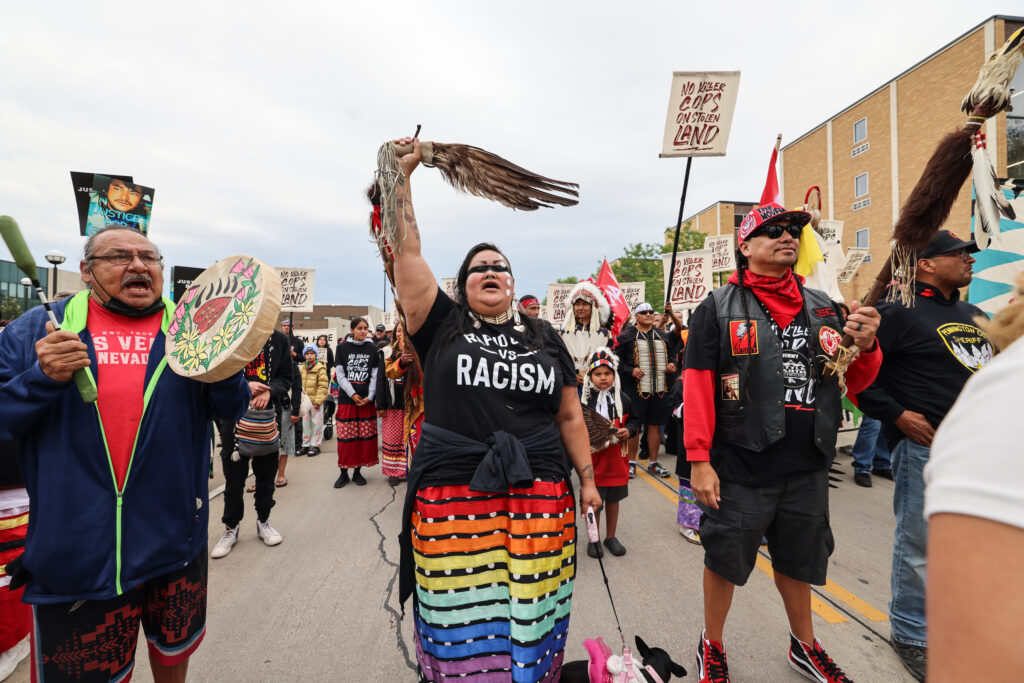
Photos by Richard Blue Cloud Castaneda and Angel White Eyes for NDN Action Network
Ways to Take Action
✏️Sign the Petition: No Killer Cops on Stolen Land
✏️Sign the Petition: Free Leonard Peltier
✊🏽Fund the Movement and Make a Donation
📱Text “RapidvRacism” to 50302 to join the campaign
Visit the March Toward Justice website to learn more
Related Stories
Press Release | NDN Action Network Hold March Toward Justice, Calls for Overhaul of Policing
Video | NDN Live: Press Conference for the #MarchTowardsJustice #RapidCity #SD
Video | NDN Live: Day 2 of #MarchTowardsJustice Community Art Build #RapidCity #SD
Video | NDN Live: Day 1 of #MarchTowardsJustice Community Art Build #RapidCity #SD
Blog | NDN Action Network to March Toward Justice for So-called Independence Day
Press Statement | NDN Action Network Releases Statement on Planned July 4 March
LANDBACK For the People Podcast | S1 Ep. 2: Fighting Racism in the Hesapa
Blog | Police Assault Indigenous Youth with Disabilities at Central High School (Trigger Warning: The following statement contains language and video addressing acts of physical assault)
Blog | NDN Collective Responds to DOJ Lawsuit Against Grand Gateway Hotel
Blog | NDN Collective Responds to Brutal K9 Attack on Native Man in Rapid City (Trigger Warning: The following statement contains language and video addressing acts of physical assault)